Beginner Full-Body Workout Plan: Your First 4 Weeks at the Gym

Walking into a gym for the first time is one of the most intimidating experiences in adult life. You have finally committed to building a stronger, more resilient body, but the moment you step onto the training floor, you are hit with a wave of decision paralysis.
To your left, someone is doing a complex, bouncing circuit on a Bosu ball. To your right, a bodybuilder is screaming through their fifth variation of a bicep curl. You wander over to the treadmill, hit “Quick Start,” and spend 30 minutes wondering what you should actually be doing.
The fitness industry thrives on making things complicated so they can sell you the solution. They push complex “muscle confusion” routines and five-day-a-week body-part splits that leave beginners exhausted, perpetually sore, and entirely demotivated.
At Tulsa Fitness Club (TFC), located in the historic Blue Dome District, we despise the commercial fluff. Building genuine strength is not complicated; it is simply hard work combined with basic biological principles.
If you are ready to stop guessing and start building, this is the ultimate beginner workout plan gym guide. We are going to strip away the noise and lay out a focused, 4-week full-body blueprint designed to build a foundation of raw strength and muscle memory.
The Philosophy: Why Full-Body Training Wins
When beginners search for a workout routine, they usually stumble upon a “bro-split”—a routine that dedicates a single day to a single muscle group (e.g., “Chest Day” on Monday, “Leg Day” on Wednesday).
While splits work well for advanced bodybuilders heavily dosing their volume, they are a terrible choice for a beginner.
As a beginner, your primary goal is not to destroy your muscles; your goal is to teach your central nervous system how to execute complex movements safely. Strength is a skill. If you only practice barbell squats once a week on “Leg Day,” it will take you months to master the form.
A full-body workout plan hits your major muscle groups three times a week. By practicing the core movements more frequently, you adapt faster, build muscle memory quicker, and experience less crippling soreness because the daily volume is manageable.
The Core Movement Patterns
To build a complete physique, you do not need 15 different exercises. You only need to master four fundamental movement patterns:
- The Squat: Bending at the knees and hips (e.g., Barbell Back Squat, Goblet Squat).
- The Hinge: Pushing the hips backward with minimal knee bend (e.g., Conventional Deadlift, Romanian Deadlift).
- The Push: Moving weight away from your torso (e.g., Bench Press, Overhead Press).
- The Pull: Moving weight toward your torso (e.g., Barbell Row, Lat Pulldown).
If a program does not prioritize these four pillars, it is wasting your time.

The barbell squat is the undisputed king of full-body strength, forcing your core, back, and legs to work in unison.. Source: Photology1971 / Getty Images
The 4-Week Blueprint: Your First Month at the Gym
This beginner workout plan gym routine operates on an alternating schedule. You will train three days a week (e.g., Monday, Wednesday, Friday), alternating between Workout A and Workout B. You must take at least one full rest day between sessions to allow your muscles to recover and rebuild.
Workout A: The Foundations
- Barbell Squat: 3 sets of 5-8 reps
- Flat Barbell Bench Press: 3 sets of 5-8 reps
- Barbell Bent-Over Row: 3 sets of 8-10 reps
- Plank (Core): 3 sets of 30-45 seconds
Workout B: The Posterior Chain
- Conventional Deadlift: 3 sets of 5 reps
- Standing Overhead Press: 3 sets of 5-8 reps
- Lat Pulldowns (or Pull-ups): 3 sets of 8-12 reps
- Dumbbell Walking Lunges: 2 sets of 10-12 reps per leg
The Progression: How to Evolve Over 4 Weeks
Doing the exact same weight for four weeks will not change your body. You must employ progressive overload—systematically increasing the demand on your muscles. Here is how your first four weeks should look:
1
Week 1: The Baseline
Mastering the mechanics
Your only goal this week is to learn the movements. Use an empty barbell or very light dumbbells. Do not push to failure. Focus entirely on your bracing, your depth on the squat, and keeping your back flat during the deadlift. You should leave the gym feeling energized, not destroyed.
2
Week 2: Finding Your Working Weight
Adding the iron
Begin adding small amounts of weight to the bar (5 to 10 pounds). You are looking for a weight that feels challenging by the last two reps of your set, but not so heavy that your form begins to break down. This is your baseline working weight.
3
Week 3: Forcing Adaptation
The progressive push
This is where the real work begins. Attempt to add 2.5 to 5 pounds to your upper body lifts (Bench, Overhead Press) and 5 to 10 pounds to your lower body lifts (Squat, Deadlift) compared to Week 2. If you hit all your target reps with good form, you successfully overloaded the muscle.
4
Week 4: Volume and Confidence
Solidifying the habit
Continue pushing the weight up marginally. By Week 4, the barbell should no longer feel foreign. Your central nervous system has adapted to the mechanics, and you are officially transitioning from a beginner learning the ropes to a novice actively building strength.
Was this visual helpful?
Yes No
The Equipment Check: Why Your Environment Matters
You cannot execute a heavy barbell program if your gym doesn’t respect the iron.
If you attempt this beginner workout plan at a commercial fitness center, you will quickly run into massive bottlenecks. You will spend 20 minutes waiting for one of the two available squat racks, or you will be forced to use a fixed-path Smith machine, which completely ruins the stabilizing benefits of a free-weight squat.
To build genuine strength, you need a facility that prioritizes the correct equipment.
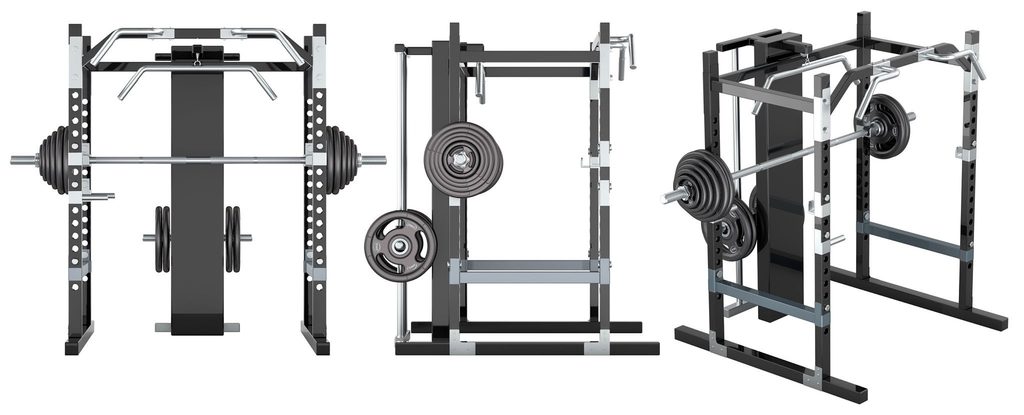
A true strength facility prioritizes multiple heavy-duty power racks and classic iron so you never have to wait to execute your primary lifts.. Source: natatravel / Getty Images
At Tulsa Fitness Club, we bypassed the fragile, trendy cardio machines and the juice bars to invest heavily in the “golden and silver era” of strength training.
- Multiple Heavy-Duty Power Racks: Walk in, set up your barbell, and get to work.
- Deadlift Platforms: Built for heavy pulling with competition-grade bumper plates.
- Unrestricted 24/7 Access: Your encrypted digital key fob grants you access 365 days a year, so you can execute your program on your schedule, whether that is 5:00 AM or midnight.
Stop Guessing. Start Building.
You have the blueprint. Now you just need the environment and the discipline to execute it.
If you are tired of the commercial gym crowds and want to train in a gritty, focused sanctuary in downtown Tulsa, it is time to upgrade your membership.
We operate on a strictly transparent, no-contract basis. We do not charge hidden initiation fees, and we do not ambush you with annual maintenance taxes. Right now, you can lock in our Founding Member Presale Rate starting at just $37/month (with your first month for only $1).
If you want to take the guesswork completely out of your routine, our Silver Tier ($97/mo) gives you expertly designed, periodized programming templates that take this 4-week beginner plan and scale it into a year-long strength journey.
Call us at 918-550-5549 or drop by 314 E 3rd St., Tulsa, OK 74120 during staffed hours to tour the facility, pick up your key fob, and lock in your Founding Member pricing before the presale ends.