
Weight Training for Beginners: Sets, Reps, and Rest Explained
Walking onto the floor of a gym for the first time is like stepping into a foreign country where everyone speaks a different language. You hear people throwing around phrases like “3×10,” “AMRAP,” “hypertrophy block,” and “progressive overload,” and you immediately feel like you missed the orientation class.
If you are just starting your fitness journey, the sheer volume of conflicting information online is paralyzing. One fitness influencer tells you to do 15 reps to “tone” your muscles, while another tells you that anything over 5 reps is cardio.
The fitness industry often uses complicated jargon to make simple biological concepts seem like proprietary secrets. But at Tulsa Fitness Club (TFC), located in the historic Blue Dome District, we despise the gatekeeping of fitness knowledge. We believe that building a resilient, capable body is a straightforward, scientific process that anyone can master.
If you are tired of wandering the gym floor and guessing at your routine, this is your definitive guide to weight training for beginners. We are going to strip away the fluff, define the core terminology, and explain exactly how to structure your sets, reps, and rest periods to actually drive physical progress.
The Core Terminology: Decoding the Numbers
Before you can execute a strength program, you have to understand how to read it. When you see a workout written out, it almost always follows a standard numerical format: Sets × Reps.
For example, if your program says: Barbell Back Squat: 3 x 8, what does that actually mean?
1. Repetitions (Reps)
A “rep” is a single, complete execution of an exercise. If you unrack a barbell, squat down, and stand back up, you have completed one repetition.
2. Sets
A “set” is a group of repetitions performed consecutively without stopping. In the example of “3 x 8,” you are going to perform 8 repetitions in a row. That is one set. You will then rest, and repeat that process two more times until you have completed 3 total sets.
3. Rest Periods
This is the amount of time you spend recovering between your sets. Rest is not a suggestion; it is a critical biological requirement. When you lift heavy weights, you deplete the ATP (energy) stores in your muscles. If you do not rest long enough, your muscles will not have the energy required to execute the next set safely.
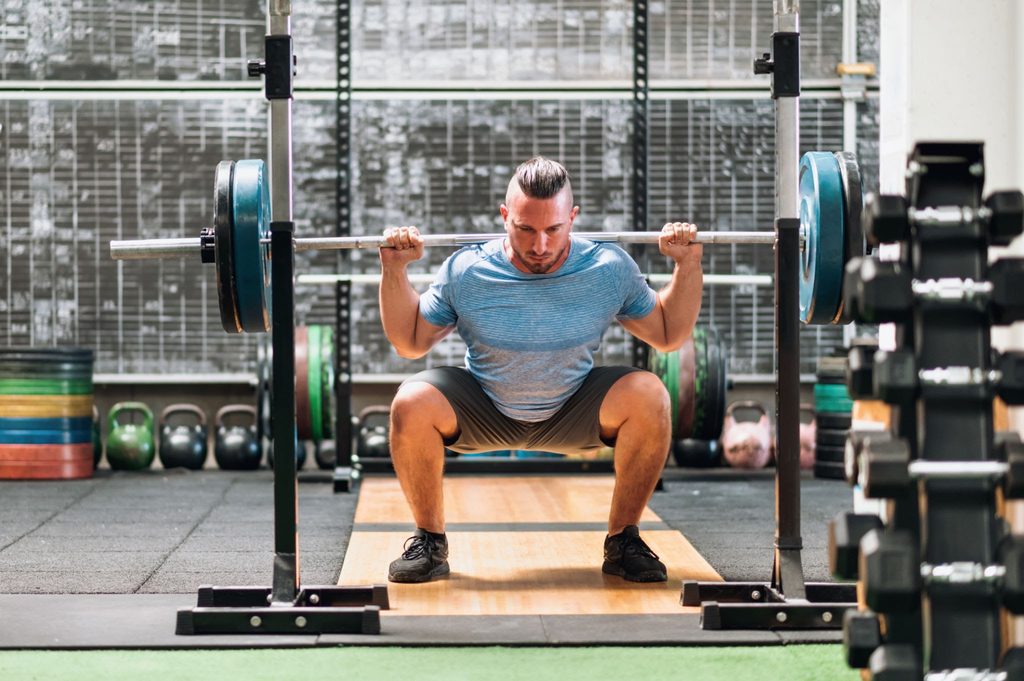
The barbell back squat: executing multiple sets of heavy compound movements requires strict attention to your rep count and your rest periods.. Source: Photology1971 / Getty Images
The “Rep Range” Myth and the Science of Adaptation
The most common question beginners ask is: “How many reps should I do?”
The fitness industry has historically peddled a massive myth: heavy weights for low reps build “bulky” muscle, and light weights for high reps build “long, lean, toned” muscle.
This is biologically false. You cannot make a muscle longer; its length is determined by your genetics and where your tendons attach to your bones. You can only make a muscle larger (hypertrophy) or stronger (neurological adaptation).
The number of reps you perform dictates the type of adaptation your body undergoes.
The Strength Range (1 to 5 Reps)
When you lift an incredibly heavy weight for a low number of reps, you are primarily training your Central Nervous System (CNS). You are teaching your brain to recruit as many muscle fibers as possible simultaneously.
- The Goal: Pure, raw strength.
- The Tool: Heavy compound movements (Barbell Squats, Deadlifts, Overhead Presses).
- For Beginners: Not recommended immediately. Your joints and connective tissues need time to adapt before handling maximum loads.
The Hypertrophy Range (6 to 12 Reps)
This is the sweet spot for building muscle mass. Lifting a moderate-to-heavy weight in this range provides enough mechanical tension to create micro-tears in the muscle tissue, which your body repairs and builds back thicker.
- The Goal: Muscle growth (Hypertrophy) and foundational strength.
- The Tool: Compound movements and heavy machine isolations.
- For Beginners: This is where you should spend 90% of your time. It builds both size and strength while allowing you to practice good form.
The Endurance Range (15+ Reps)
Lifting lighter weights for high repetitions primarily trains muscular endurance and pumps nutrient-rich blood into the muscle (metabolic stress).
- The Goal: Endurance and muscle exhaustion.
- The Tool: Cable machines, light dumbbells, and isolation exercises (bicep curls, leg extensions).
- For Beginners: Useful for finishing a workout safely, but ineffective as the core driver of a strength routine.
Was this visual helpful?
Yes No
The Forgotten Variable: Rest Periods
If there is one massive mistake you will see on any commercial gym floor, it is how people manage their rest periods.
Often, people treat weight training like a cardio session. They finish a set of bench presses, immediately jump up, do a set of jumping jacks, and jump right back onto the bench 30 seconds later. They are prioritizing a high heart rate over mechanical tension.
If you are executing a proper weight training for beginners program, you must respect the rest intervals.
Why You Must Rest
When you lift heavy, your muscles rely on the ATP-CP (adenosine triphosphate-creatine phosphate) energy system. This system provides massive amounts of energy for short bursts (like lifting a heavy barbell), but it depletes entirely within 10 to 15 seconds.
It takes your body roughly 2 to 3 minutes to fully replenish those energy stores.
If you only rest for 45 seconds between heavy sets of squats, your muscles have not recovered. On your next set, you will inevitably fail early, or worse, your form will break down and you will injure your lower back.
The Rest Period Guidelines
- Heavy Compound Lifts (Squats, Deadlifts, Bench Press): Rest 2 to 3 minutes between sets.
- Moderate Isolation Lifts (Machine rows, Leg Press): Rest 90 seconds to 2 minutes between sets.
- Light Accessory Work (Bicep curls, Tricep extensions): Rest 60 to 90 seconds between sets.
Do not rush the rest. If you feel fully recovered after 30 seconds of resting from a barbell squat, the weight you are lifting is simply too light to trigger an adaptation.
Putting It All Together: Structuring a Workout
Now that you understand the variables, how do you actually structure a session when you walk into the gym?
A professional strength program is structured like a funnel. You start with the most demanding, neurologically complex movements while you are fresh, and you end with safer, isolated movements as you become fatigued.
1
Phase 1: The Primary Compound Lift
The Foundation
Start your workout with the heaviest, most complex movement of the day. This is usually a Barbell Squat, Deadlift, or Bench Press. Because these require the most balance and energy, you do them first. \nProtocol: 3 to 4 sets of 5 to 8 reps. \nRest: 2 to 3 minutes between sets.
2
Phase 2: Secondary Compound Lifts
Building the mass
Move on to exercises that still use multiple muscle groups but are slightly less taxing on the central nervous system, such as Dumbbell Lunges, Overhead Presses, or Lat Pulldowns. \nProtocol: 3 sets of 8 to 12 reps. \nRest: 90 seconds to 2 minutes.
3
Phase 3: Isolation and Accessories
Targeted exhaustion
Finish the workout with exercises that target single muscle groups. Because your core and stabilizers are fatigued, use machines or cables for safety (e.g., Leg Extensions, Cable Curls). \nProtocol: 2 to 3 sets of 12 to 15 reps. \nRest: 60 to 90 seconds.
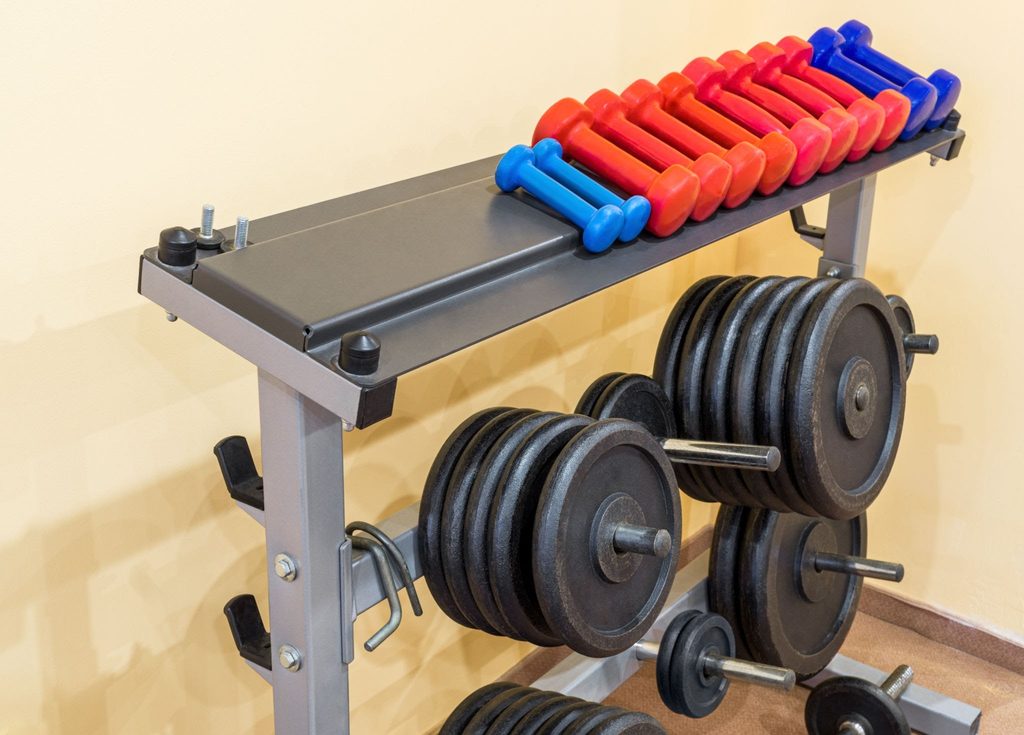
When structuring your routine, progress from heavy barbells down to dumbbells and finally machines as your central nervous system fatigues.. Source: Hanna_Alandi / Getty Images
The TFC Advantage: Coaching Built for Beginners
Understanding the science of sets, reps, and rest is the first step. But executing it consistently in a crowded, chaotic commercial fitness center is incredibly frustrating.
If you are trying to strictly rest for two minutes between your sets of squats, but there is a line of three people glaring at you to hurry up because the gym only has one power rack, your workout is going to suffer.
At Tulsa Fitness Club, we built an environment that actively supports your progress.
- Elite Equipment Ratios: We prioritize heavy-duty power racks and deadlift platforms. You have the space and the equipment to execute your primary compound lifts and take your required rest periods without being rushed.
- Unrestricted 24/7 Access: Your key fob grants you entry 365 days a year. If you prefer to learn the ropes when the gym is completely empty at midnight or 4:00 AM, the iron is always waiting for you.
You Don’t Have to Guess
If reading through rep ranges and rest intervals feels overwhelming, you don’t have to figure it out on your own. We eliminated the need for expensive hourly personal trainers by building elite coaching directly into our memberships.
- Bronze Tier ($47/mo — Presale $37/mo): Full 24/7 access to the facility for the independent lifter who already knows their program.
- Silver Tier ($97/mo): 24/7 access plus expertly designed, periodized programming templates. We tell you exactly how many sets, reps, and minutes of rest to take for every single workout.
- Gold Tier ($297/mo): Full access, premium coaching check-ins, form reviews, and highly customized programming to ensure your execution is flawless.
Right now, you can lock in our Founding Member Presale Rate starting at just $37/month, and your first month is only $1.
And with the upcoming launch of our Catalyst Coworking space and Fuel Bar, TFC is rapidly becoming the ultimate off-site hub for downtown Tulsa professionals to train heavily, recover properly, and work efficiently.
Stop guessing your way through your workouts. Call us at 918-550-5549 or drop by 314 E 3rd St., Tulsa, OK 74120during staffed hours to tour the gym, pick up your key fob, and lock in your membership before the presale ends. No contracts. No hidden fees. Just pure, structured strength.