What “Muscle Gym” Actually Means and How to Spot One in Tulsa

You have finally hit the plateau. You have been going to the big-box commercial fitness center in the suburbs, doing your 30 minutes on the elliptical, and wandering through the maze of fixed-path selectorized machines. You want to build genuine strength, but every time you try to progress, you hit a wall.
The dumbbells max out at 75 pounds, there is a 20-minute wait for the single squat rack, and the staff gets nervous if your deadlift makes too much noise. You realize you need a completely different environment. You open your phone and search for muscle gyms near me.
But what does that term actually mean? In the modern fitness industry, the phrase “muscle gym” has been heavily stereotyped. People often picture a dark, un-air-conditioned warehouse filled exclusively with 300-pound competitive bodybuilders screaming at each other. Because of this outdated stigma, many regular professionals and fitness enthusiasts avoid these facilities, assuming they won’t fit in.
At Tulsa Fitness Club (TFC), located in the historic Blue Dome District, we are actively redefining what a muscle gym looks like for the modern era. We built a classic strength sanctuary that strips away the commercial fluff while maintaining a professional, highly secure environment.
If you are trying to graduate from the casual health club to a facility that actually drives results, here is a complete breakdown of what a true “muscle gym” actually is, the red flags of commercial imposters, and how to spot the real deal in Tulsa, OK.
The True Definition of a Muscle Gym
A muscle gym is not defined by the size of the people inside it; it is defined by the purpose of the equipment and the focus of the culture.
Commercial health clubs are designed to appeal to the lowest common denominator. They prioritize amenities like swimming pools, massage chairs, and smoothie bars, often dedicating 70% of their floor space to cardiovascular machines. Their business model relies on selling you a 12-month contract and hoping you never actually show up.
A muscle gym, conversely, is built entirely around the biological principle of progressive overload. Progressive overload is the requirement that you must subject your muscles to increasing amounts of mechanical tension over time to force adaptation (muscle growth and strength gains).
To facilitate progressive overload, a facility must prioritize heavy, versatile free weights. A true muscle gym is an iron sanctuary. It is a place where the equipment allows you to train heavy compound movements safely, and where the culture respects the effort it takes to execute them.
A true muscle gym is defined by its commitment to free weights and progressive overload, not by arbitrary commercial rules.. Source: Milan_Jovic / Getty Images
3 Red Flags: How to Spot a “Fake” Muscle Gym
Many commercial franchises are now trying to market themselves as “hardcore” or “strength-focused” to attract serious lifters, but their corporate policies quickly reveal their true nature. If you are touring a facility you found by searching “muscle gyms near me,” watch out for these three massive red flags.
1. The Dumbbell Ceiling
Walk straight over to the dumbbell rack. In a generic commercial fitness center, the dumbbells usually stop at 50 or 75 pounds. For a beginner, this seems like plenty. But for an intermediate or advanced lifter executing heavy dumbbell rows or flat bench presses, a 75-pound limit completely halts your progress. A legitimate muscle gym will stock heavy hex dumbbells that scale up to 120, 130, or even 150 pounds to accommodate elite strength athletes.
2. The Squat Rack Ratio
Look at the ratio of treadmills to squat racks. The barbell back squat is the foundational movement of human strength. If a 40,000-square-foot facility has 100 treadmills but only two power racks (and one of them is a Smith machine), they do not want you lifting heavy. They are deliberately creating a bottleneck to discourage free-weight training.
3. The “Lunk Alarm” Culture
This is the ultimate corporate red flag. If a gym enforces a policy against dropping weights, grunting, or using chalk, it is actively hostile to strength training. If you are attempting a one-rep max deadlift, the weight is going to make a sound when it returns to the platform. A muscle gym embraces the noise of hard work; a commercial gym penalizes it.
Was this visual helpful?
Yes No
The TFC Standard: What to Look For on the Floor
If you want to know what a modern muscle gym actually looks like, step onto the floor at Tulsa Fitness Club. We bypassed the corporate fluff and invested heavily in the “golden and silver era” of strength equipment.
When you evaluate a facility, run it through this specific equipment checklist. This is what separates the pretenders from the actual iron sanctuaries:
1
Heavy-Duty Power Racks
The foundation of strength
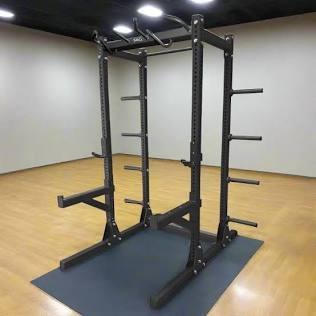
You shouldn’t have to wait 30 minutes to squat. A muscle gym features multiple, rugged power racks equipped with robust safety pins, pull-up bars, and plate storage. This allows athletes to train heavy squats, bench presses, and rack pulls safely without needing a spotter
.
2
Deadlift Platforms and Bumper Plates
Built for impact
Pulling heavy weight from the floor is non-negotiable. A real facility features dedicated, reinforced wooden and rubber deadlift platforms combined with competition-grade bumper plates that are designed to be dropped safely without damaging the equipment or the foundation.
3
Specialty Barbells
Tools for overcoming plateaus
A standard straight Olympic bar is just the beginning. A premium muscle gym provides specialty bars like the Trap Bar (hex bar) for safer deadlifts, the Safety Squat Bar (SSB) for lifters with shoulder mobility issues, and the Swiss Bar (multi-grip) for neutral grip pressing.
4
Plate-Loaded Machines
Isolating the mechanics
While free weights are king, advanced hypertrophy (muscle growth) requires high-quality, plate-loaded machines (like a proper hack squat or a chest-supported T-bar row) that match the body’s natural strength curve better than basic cable stacks.
At TFC, we prioritize the heavy-duty power racks and classic iron required to build genuine strength, ensuring you never have to wait in line to squat.. Source: Dumbbells Direct
Beyond the Equipment: The Modern Professional’s Hub
Historically, the downside of the traditional muscle gym was the lack of modern convenience. They were often uncomfortably hot, dirty, and operated on strange hours that catered only to competitive bodybuilders.
At Tulsa Fitness Club, we merged the gritty effectiveness of the golden-era iron with the seamless convenience required by modern downtown professionals.
1. Unrestricted 24/7 Security Access
Whether you are a shift worker at St. John Medical Center or a corporate attorney burning the midnight oil, your training schedule shouldn’t be dictated by a front desk attendant. When you join TFC, you are issued an encrypted digital key fob.
Your fob grants you unrestricted 24/7 access to the facility, 365 days a year. We utilize advanced anti-tailgating sensors and high-definition surveillance to ensure a highly secure, intensely focused environment, even at 3:00 AM.
2. Catalyst Coworking & Fuel Bar (Coming Soon)
We know that building muscle is only one part of your demanding day. To support the lifestyle of the busy professional, TFC is actively developing the Catalyst Coworking space and an on-site Fuel Bar.
You will be able to crush a heavy lifting session on competition-grade equipment, grab a high-protein recovery shake from the Fuel Bar, and seamlessly transition into a quiet, secure high-speed Wi-Fi lounge to knock out morning emails. We are turning the muscle gym into a comprehensive off-site hub for physical and professional productivity.
3. Built-In Professional Coaching
A true muscle gym doesn’t just hand you heavy weights and wish you luck. We provide the roadmap. Instead of charging you an $800-a-month hourly meter for personal training, we built elite coaching directly into our transparent membership tiers.
Stop Searching. Start Lifting.
If you are tired of corporate fitness centers that actively discourage heavy lifting, it is time to upgrade your environment. You don’t need a room full of treadmills; you need a room full of focused individuals and the right tools for progressive overload.
At TFC, we operate on a strictly transparent, no-contract basis. We do not charge hidden initiation fees, and we do not ambush you with annual maintenance taxes.
- Bronze Tier ($47/mo — Presale $37/mo): Unrestricted 24/7 access to all classic strength equipment. Perfect for the independent lifter who already knows their program.
- Silver Tier ($97/mo): 24/7 access plus expertly designed, periodized programming templates to structure your workouts and eliminate guesswork.
- Gold Tier ($297/mo): Full access, premium coaching check-ins, and highly customized programming to act as a complete personal training replacement.
The Presale Advantage: Right now, you can lock in our Founding Member Presale Rate starting at just $37/month, and your first month is only $1.
Stop letting the limitations of a commercial gym dictate your physical progress. When you search for muscle gyms near me, you are searching for a facility that respects the iron. You have found it.
Call us at 918-550-5549 or drop by 314 E 3rd St., Tulsa, OK 74120 during staffed hours to tour the facility, pick up your key fob, and lock in your Founding Member pricing before the presale ends. No contracts. No hidden fees. Just pure strength.