Golden Era Bodybuilding Workout: How the 1970s Lifters Trained
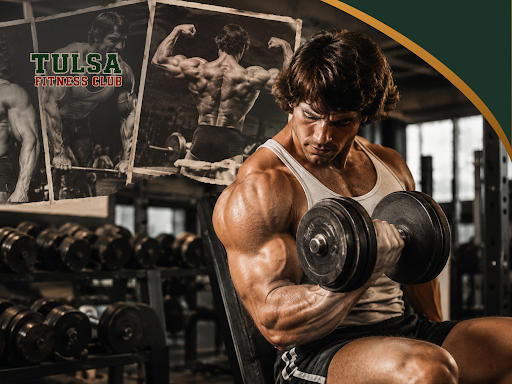
If you look at the landscape of modern commercial fitness, you will see a massive disconnect between the equipment provided and the physiques being built. Today’s corporate mega-gyms are packed with computerized, fixed-path isolation machines, elliptical trainers with built-in televisions, and signs actively begging you not to drop your weights or grunt.
Yet, if you look back at the 1970s—the undisputed Golden Era of bodybuilding—you will see the greatest physiques in human history built in environments that possessed none of this technology.
Athletes like Arnold Schwarzenegger, Franco Columbu, Frank Zane, and Tom Platz did not build their legendary proportions by doing 15 minutes of light cable crossovers and sitting in a eucalyptus steam room. They built armor-plated muscle through brutal, high-volume, free-weight compound lifting in gritty, un-air-conditioned warehouses.
If you are tired of the hyper-sanitized, low-effort culture of modern fitness and want to train like the legends, you have to completely rewire your approach to the iron. At Tulsa Fitness Club (TFC), located in the Blue Dome District at 314 E 3rd St., we deliberately engineered a facility that resurrects the heavy-duty infrastructure of the 1970s barbell clubs.
Here is the brutally honest, biological breakdown of the Golden Era bodybuilding workout, how the legends actually trained, and why you cannot execute this programming in a corporate franchise gym.
The Death of the “Bro-Split” (High Frequency Training)
One of the greatest myths perpetuated by modern fitness magazines is that the Golden Era bodybuilders trained one muscle group per day (the classic “Bro-Split” where you train chest on Monday, back on Tuesday, legs on Wednesday, etc.).
If you look at the actual training logs from the 1970s Gold’s Gym era in Venice Beach, almost no one trained a muscle group only once a week. They understood, long before modern sports science published peer-reviewed studies on muscle protein synthesis, that a muscle recovers and is ready to be stimulated again within 48 to 72 hours.
If you wait seven days to train your chest again, you are leaving massive amounts of muscular growth on the table.
The Classic Arnold Split
The most famous routine of the era was a brutal, six-day-a-week, high-frequency protocol. It was designed to hit every major muscle group twice a week with devastating volume.
- Monday/Thursday: Chest and Back
- Tuesday/Friday: Shoulders and Arms
- Wednesday/Saturday: Legs and Lower Back
- Sunday: Complete Rest (or active recovery at the beach)
This frequency is mathematically superior for hypertrophy. By hitting a muscle twice a week, you trigger the muscle protein synthesis response 104 times a year, compared to just 52 times a year on a standard once-a-week split.
However, this level of frequency requires incredible mental resilience and a facility that does not restrict your training. You cannot execute a heavy 6-day split if your gym closes early on weekends or if you have to wait 30 minutes in line for a bench press.
Free Weight Dominance: Iron Over Cables
If you look at photos of the original hardcore gyms from the 70s, you will notice a glaring lack of complex machinery. The environments were defined by heavy steel: squat racks, flat benches, pull-up bars, and massive racks of dumbbells.
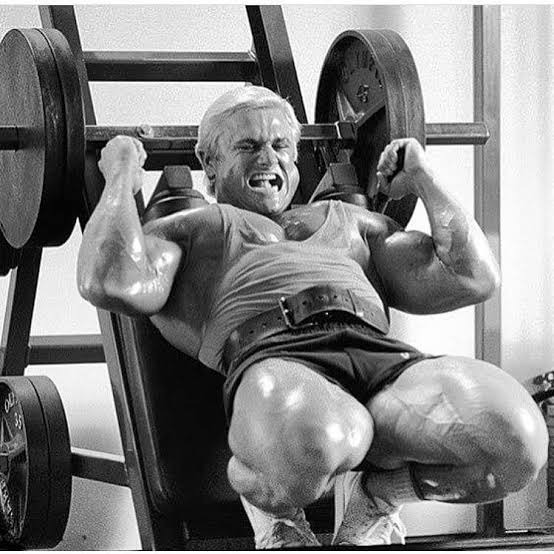
The legends of the 1970s did not build their legs on a padded leg extension machine. They built them under heavy barbells with brutal sets of deep squats.. Source: Old School Labs
The Golden Era bodybuilding workout relied almost entirely on free weights. This was not just a product of the times; it is a biomechanical necessity for building a classic physique.
The Stabilizer Effect
When you sit on a modern, fixed-path chest press machine, the machine balances the load for you. You simply push forward.
When you lie on a flat bench with a heavy pair of 100-pound dumbbells, your central nervous system (CNS) has to work in overdrive. Your core must brace aggressively, your spinal erectors fire to maintain an arch, and the small stabilizer muscles in your rotator cuffs are forced to lock the humerus into the shoulder joint.
This total-body stabilization requirement recruits a massive amount of high-threshold motor units that fixed machines simply bypass. The golden era physiques looked incredibly dense and three-dimensional precisely because they trained their stabilizer muscles alongside their primary movers.
The Core Compound Movements
The foundation of every 1970s workout was the heavy barbell compound lift. They did not start their chest day with cable flyes. They started with heavy flat bench presses.
- Chest: Heavy Barbell Bench Press, Incline Dumbbell Press, Weighted Dips, Dumbbell Pullovers (specifically to stretch the ribcage and activate the serratus).
- Back: Barbell Deadlifts, Heavy T-Bar Rows, Wide-Grip Pull-ups (done strictly, usually weighted), Bent-Over Barbell Rows.
- Legs: Deep Barbell Back Squats, Front Squats, Heavy Leg Presses, Stiff-Legged Romanian Deadlifts.
- Shoulders: Heavy Barbell Overhead Press (often seated or standing military press), Dumbbell Lateral Raises.
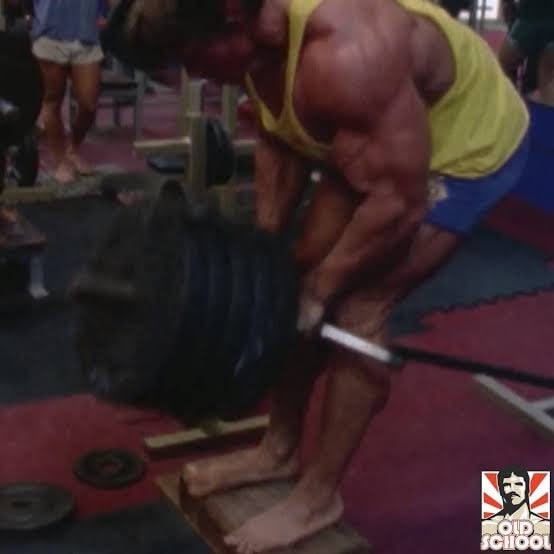
The T-Bar row is a staple of Golden Era back training. It allows for massive force production and deep latissimus dorsi stretch.. Source: Facebook
Brutal Volume and Chasing the Pump
Modern evidence-based fitness often preaches “optimal” low-volume training. They suggest doing two working sets to failure and leaving the gym. While this works well for raw strength, it completely ignores the metabolic reality of building the sweeping, round muscle bellies characteristic of the 1970s bodybuilders.
The Golden Era legends believed in volume.
A typical chest and back workout for Arnold would include 20 to 25 total working sets for the chest, and another 20 sets for the back. This massive accumulation of volume serves a highly specific biological purpose: metabolic stress.
The Science of the Pump
When you perform 4 sets of 12 reps on an Incline Dumbbell Press with short rest periods, your muscles cannot clear the metabolic waste (like lactic acid) fast enough. Blood rushes into the muscle belly and becomes trapped, creating a massive swelling effect known as the “pump.”

Heavy dumbbells require intense core stabilization. You cannot build a thick, three-dimensional chest using only fixed-path commercial machines.. Source: DMoose
This is not just for the mirror. That cellular swelling physically stretches the fascia (the tight connective tissue surrounding the muscle fibers) and signals the cells to trigger hypertrophy to handle the metabolic stress.
The 1970s lifters chased this pump relentlessly. They employed advanced techniques like supersets (doing a set of bench press immediately followed by a set of pull-ups with zero rest) to drive maximum blood volume into the upper body.
You cannot execute a heavy superset in a corporate gym. If you try to hold a bench press and a pull-up bar at the same time at a commercial franchise, the staff will reprimand you for “hogging equipment,” or another member will steal your bench the second you walk away. High-volume, intense supersets require an environment that respects the work being done.
The Mind-Muscle Connection and Posing
The final missing ingredient in modern training is the absolute focus on the muscle being worked.
Today, people lift weights while watching Netflix on their phones or texting between sets. Their goal is simply to move the weight from point A to point B.
The Golden Era bodybuilders treated lifting as a kinetic art form. They popularized the concept of the “mind-muscle connection.” If they were executing a barbell curl, they were not just swinging the weight with their lower back. They were mentally visualizing the bicep fibers contracting and tearing. They squeezed the muscle at the top of every single repetition.
The Lost Art of Isometric Posing
Between sets, they didn’t sit down. They posed.
Posing is not just about vanity; it is an incredibly brutal form of isometric training. Flexing a heavily fatigued muscle with maximum force between working sets drastically increases muscle density, improves neuromuscular control, and forces even more blood into the target area.
If you strip down to a tank top and start aggressively flexing your lats between sets of deadlifts at a commercial cardio gym, you will likely trigger a lunk alarm. The modern fitness industry has pathologized the very behaviors required to build a legendary physique.
Why You Cannot Train Like This in a Commercial Gym
If you attempt to run a true Golden Era bodybuilding workout in a standard corporate mega-gym, you will fail. The infrastructure and the culture are actively working against you.
- Equipment Scarcity: You cannot do high-volume heavy squats if the gym only has two flimsy half-racks for 3,000 members.
- Dumbbell Limits: Commercial gyms regularly cap their dumbbells at 50 or 75 pounds. You will outgrow them on your chest presses and heavy rows in a matter of months.
- The Culture of Mediocrity: Heavy, high-volume training requires grunting, sweating, chalk, and aggressive focus. Corporate gyms have literally installed sirens to punish this exact behavior.
If you want to train like the legends, you need an environment that mirrors their infrastructure.
The TFC Solution: Your Downtown Iron Sanctuary
At Tulsa Fitness Club, we realized that the commercial fitness industry had abandoned the serious lifter. We built our facility at 314 E 3rd St. in the Blue Dome District specifically to serve as the ultimate heavy-duty strength sanctuary for the driven Tulsa professional.
We brought the gritty, raw infrastructure of a Golden Era barbell club into the modern age.
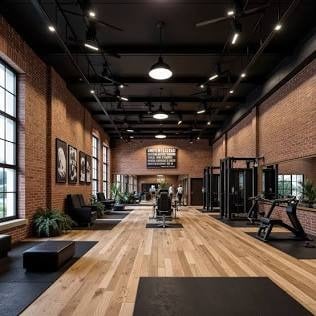
TFC provides the raw, industrial infrastructure of the 1970s barbell clubs, featuring multiple heavy-duty power racks and unrestricted access to heavy iron.. Source: PromeAI
- The Hardware You Need: We over-indexed on commercial power racks, dedicated wooden deadlift platforms, and competition-grade plates. Our heavy hex dumbbells scale far beyond the commercial limits, ensuring you never max out the gym’s capabilities.
- Unrestricted 24/7 Autonomy: A heavy 6-day split requires massive scheduling flexibility. Every TFC member is issued an encrypted digital key fob granting unrestricted 24/7 access to the facility, 365 days a year. Your schedule never dictates your strength.
- Chalk and Effort are Mandatory: We do not have lunk alarms. We provide chalk. We expect you to load the bar, brace your core, and push to failure.
The Professional Ecosystem: Catalyst Coworking
While the 1970s lifters lived at the beach, the modern Tulsa local is a driven professional. We integrated our Catalyst Coworking space and the on-site TFC Fuel Bar directly into the facility to streamline your entire day.
You can walk into TFC, execute a brutal, 90-minute Golden Era chest and back superset, hit the private showers, and grab a high-protein recovery shake from the Fuel Bar. You can then transition immediately into our secure Wi-Fi coworking lounge to knock out a morning of deep-focus professional work. We merged the absolute physical intensity of the past with the professional efficiency of the future.
Lock In Your Membership (Without the Contract Trap)
We do not use predatory 12-month corporate contracts. We operate on strict transparency, offering three distinct tiers for the serious lifter:
The Bronze Tier: The Independent Iron ($47/month) Unrestricted 24/7 access to the heavy iron, the platforms, and the facility. Perfect for the independent lifter who already knows their programming and simply needs a serious space to execute the volume.
The Silver Tier: The Blueprint ($97/month) 24/7 access plus expertly designed, periodized programming templates. If you want to run a high-volume hypertrophy split but need the exact roadmap, we outline how to sequence your compound lifts and manage your recovery.
The Gold Tier: The Executive Partnership ($297/month) The ultimate coaching replacement. Full 24/7 access, highly customized programming tailored to your specific biomechanics, and premium coaching check-ins. Your TFC coach tracks your metrics and reviews your lifting videos to ensure your free-weight mechanics are absolutely flawless.
The Presale Advantage: Right now, you can lock in our Founding Member Presale Rate starting at just $37/monthfor the Bronze Tier (with your first month for only $1).
Stop capping your physical potential on fixed-path machines in gyms that hate exertion. Demand access to heavy iron, secure your absolute pricing transparency, and train in a gritty, downtown facility that expects you to grow.
Call us at 918-550-5549 or drop by our location at 314 E 3rd St., Tulsa, OK 74120 during our staffed hours to tour the facility, pick up your secure 24/7 key fob, and lock in your Founding Member pricing before the presale ends.