Lifting Straps vs Wrist Wraps: What’s the Difference?
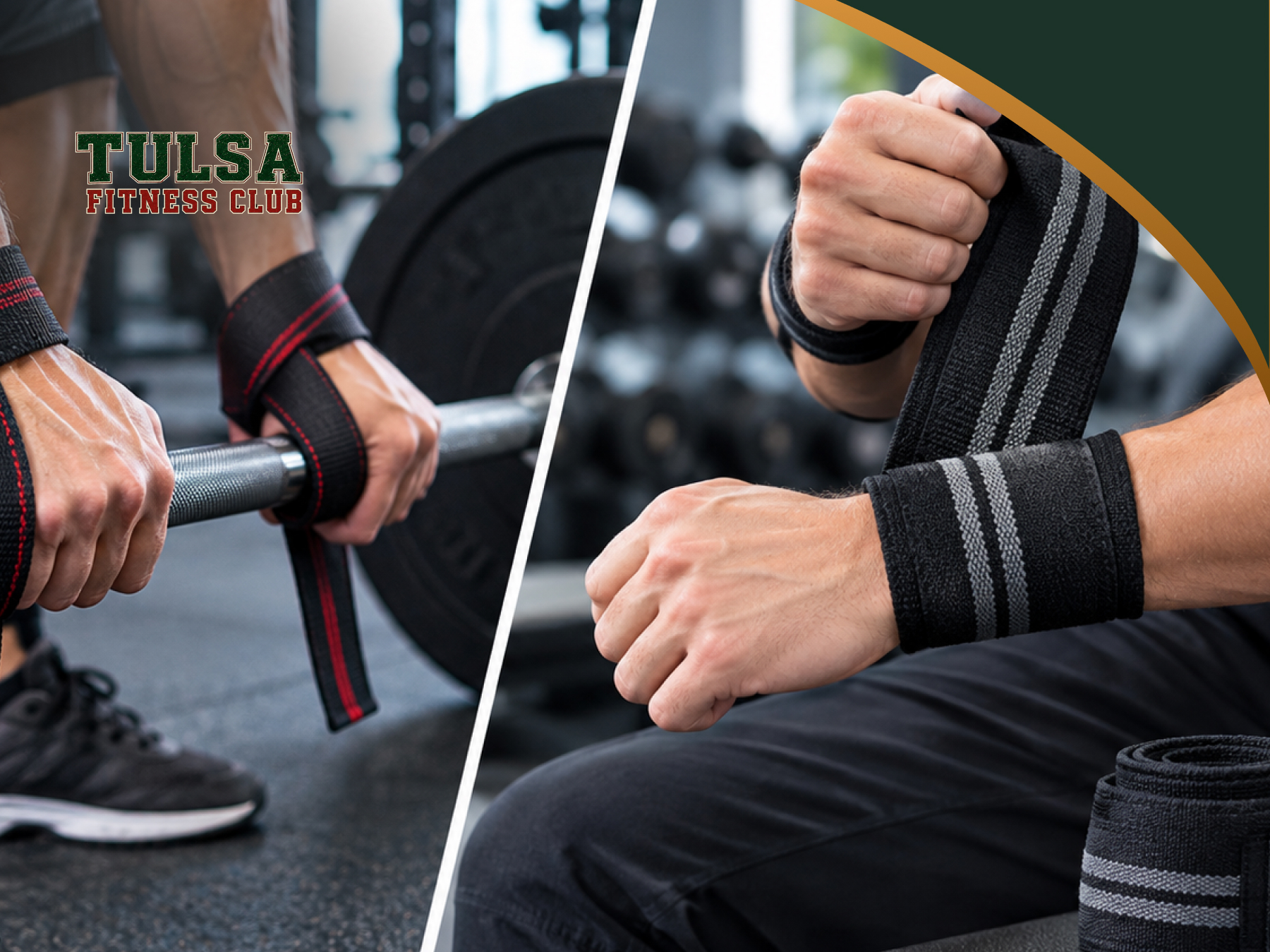
When you start moving serious iron, your primary muscles—your chest, back, and legs—will eventually outpace the structural integrity of your smaller joints and forearms. Your back might be strong enough to deadlift 400 pounds, but if your bare hands can only grip 315 pounds, your progression is mathematically capped.
That is when you must introduce supportive gear. However, treating lifting straps vs wrist wraps as interchangeable gym accessories is a massive biological error. They serve completely opposite mechanical purposes.
If you use a wrist wrap on a heavy deadlift, it does absolutely nothing. If you use a lifting strap on a bench press, you are actively creating a safety hazard.
At Tulsa Fitness Club (TFC) in the historic Blue Dome District, we expect our members to know their equipment. If you are ready to push past your natural grip and joint limitations, here is the brutally honest, biomechanical breakdown of which tool to use and when to use it.
Lifting Straps: The Ultimate Pulling Tool
Lifting straps are designed for one specific biological purpose: to eliminate grip fatigue.
They are long strips of heavy-duty cotton, nylon, or leather that loop around your wrists and then wrap tightly around the barbell. They physically anchor your hands to the iron.
- The Mechanics: During heavy pulling movements, the small flexor muscles in your forearms will always fatigue long before your massive latissimus dorsi (back) or hamstring muscles. Lifting straps transfer the weight load off your fingers and directly onto your wrists, allowing you to bypass your grip bottleneck entirely.
- When to Use Them: Straps are exclusively for pulling movements. You should deploy them on heavy Conventional Deadlifts, Romanian Deadlifts (RDLs), heavy Barbell Rows, and Shrugs.
- The Golden Rule: Do not use straps for your warm-up sets. Lift barehanded until your grip starts to actively fail, and then strap in for your heavy working sets. This ensures your natural grip strength continues to develop.
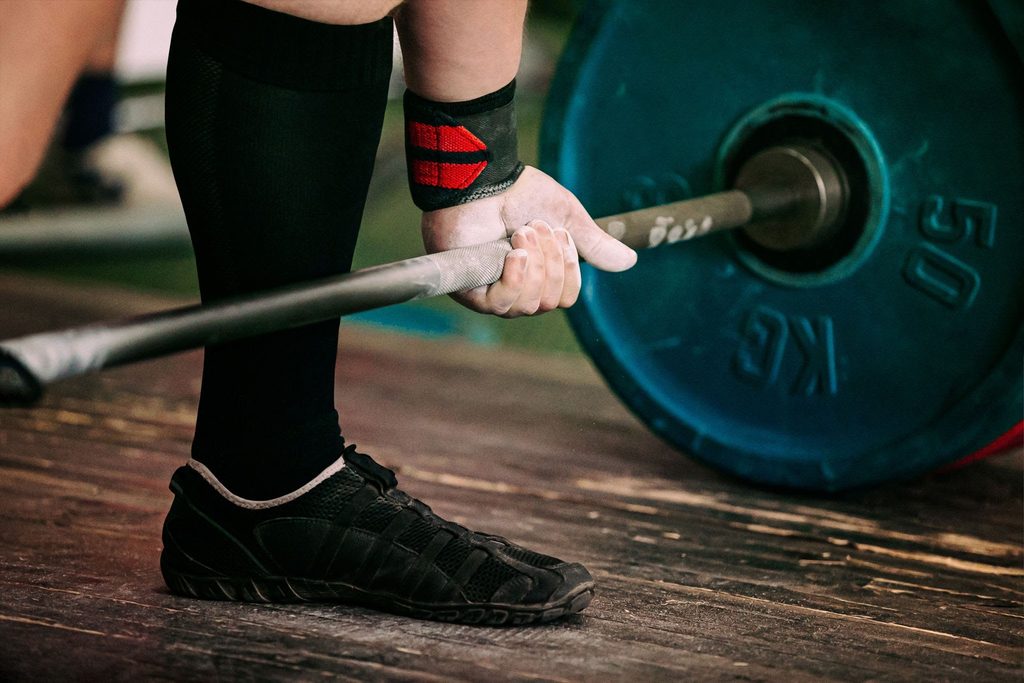
Lifting straps wrap around the barbell, anchoring your hands to the iron so your grip doesn’t fail before your back and legs do.. Source: sportpoint / Getty Images
Wrist Wraps: The Ultimate Pushing Tool
Wrist wraps have absolutely nothing to do with grip strength. They are designed for joint stability.
They are thick, elastic bands equipped with a thumb loop and heavy Velcro. You stretch them tightly around the actual wrist joint, effectively turning your hand and forearm into a single, rigid cast.
- The Mechanics: During heavy pressing movements, the sheer weight of the barbell naturally tries to force your wrists to bend backward into severe extension. This places catastrophic strain on the small tendons in your wrist and leaks power from the lift. Wrist wraps act as an external ligament, preventing your wrist from bending and ensuring 100% of your muscular force transfers directly straight through your forearm into the barbell.
- When to Use Them: Wraps are exclusively for pushing movements. Deploy them on heavy Bench Presses, Overhead Presses, and heavy Dumbbell Shoulder Presses.
- The Golden Rule: A wrist wrap must cover the actual joint. If you wrap it entirely on your forearm below the joint line, it is providing zero structural support.
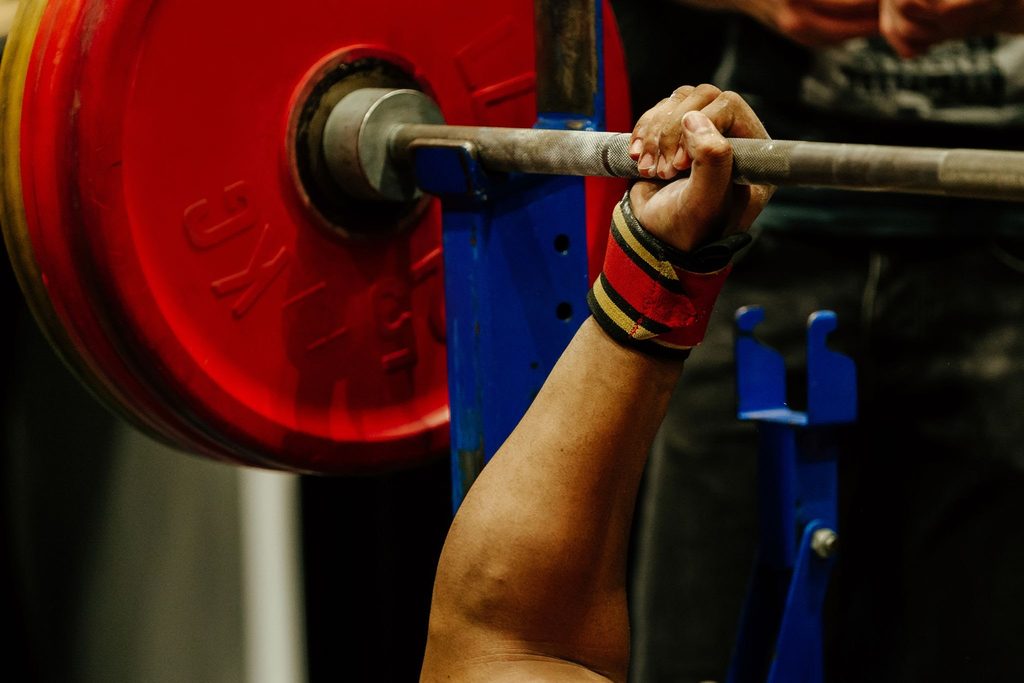
Wrist wraps must cross the actual wrist joint. They act like a temporary cast, keeping your wrist perfectly straight to maximize force transfer during heavy pressing.. Source: sportpoint / Getty Images
Generating interactive visual…Structuring code, this may take a minute
The Commercial Gym Deficit
If you want to move the kind of weight that actually requires lifting straps and wrist wraps, you cannot do it in an environment that hates heavy lifting.
Massive commercial mega-gyms often enforce “no gym bag” policies on the floor, complain if you use chalk to help your straps bite into the knurling, and lack the heavy-duty equipment required to max out your lifts. Their padded machines are designed so you never have to learn how to stabilize a heavy barbell.
If you want to build raw, functional strength, you need a facility built for execution.
The TFC Advantage: Train with Purpose
At Tulsa Fitness Club, we stripped out the commercial fluff. We built a strength sanctuary specifically for athletes who utilize the right tools for the right job.
- The Heavy Infrastructure: We prioritize multiple heavy-duty power racks, dedicated wooden deadlift platforms, and competition-grade barbells with aggressive knurling that grips your straps perfectly.
- Unrestricted 24/7 Autonomy: When you need to dial in your heavy pressing mechanics without distractions, your encrypted digital key fob grants you unrestricted 24/7 access to the facility.
- Built-In Coaching: If you are unsure exactly how to wrap your wrists for a heavy bench press, we baked professional coaching directly into our transparent memberships.
- Bronze Tier ($47/mo — Presale $37/mo): 24/7 access to the heavy iron. Perfect for the independent lifter who already has their gym bag dialed in.
- Silver Tier ($97/mo): 24/7 access plus expertly designed periodized programming templates. We tell you exactly when your volume requires you to strap in and when to push raw.
- Gold Tier ($297/mo): The ultimate coaching replacement. Full access, highly customized programming, and premium coaching check-ins. Your TFC coach tracks your metrics and reviews your lifting videos to ensure your wrist wraps are placed correctly and your strap mechanics are flawless.
The Presale Advantage: Right now, you can lock in our Founding Member Presale Rate starting at just $37/month(with your first month for only $1).
Furthermore, with the upcoming integration of our Catalyst Coworking space and Fuel Bar, TFC provides the ultimate downtown ecosystem. Execute a heavy lifting block, grab a protein shake, and transition immediately into our secure Wi-Fi lounge to conquer your workday.
Stop letting your grip dictate the size of your back. Gear up correctly, respect your joints, and train in a facility that supports the iron.
Call us at 918-550-5549 or drop by 314 E 3rd St., Tulsa, OK 74120 during staffed hours to tour the facility, secure your digital key fob, and lock in your membership before the presale ends.