How to Track Gym Progress Without Overcomplicating It
Walk into any commercial fitness center in Tulsa, and you will see dozens of people staring blankly at their smartphones. They are swiping between three different fitness apps, trying to log their heart rate, their calories, and their macros, all while their muscles get cold waiting for the next set.
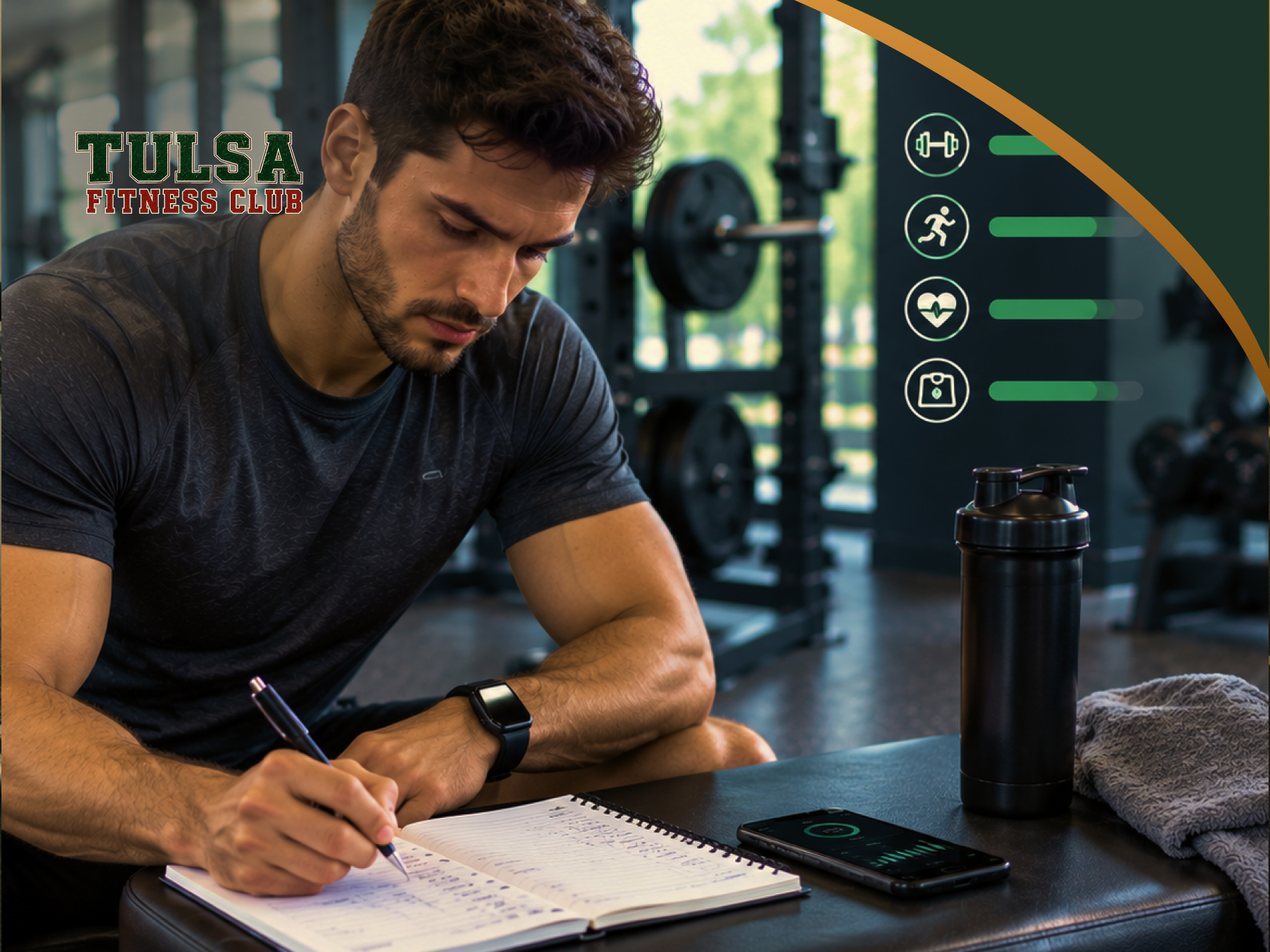
The fitness technology industry is booming, and its primary goal is to convince you that you need complex algorithms and expensive wearables to build a strong body. But when you look at the strongest, most capable lifters in any gym, they are rarely glued to a screen. They usually have a beat-up spiral notebook, a pen, and an intense focus on the iron in front of them.
If you are a busy downtown professional, a shift worker, or a student balancing a heavy workload, you don’t have time to turn your workout into a data entry job. You need to know how to track gym progress efficiently so you can get in, do the work, and get back to your life.
At Tulsa Fitness Club (TFC), located in the historic Blue Dome District, we believe in stripping away the commercial fluff. Building genuine strength relies on basic biological principles, not complicated spreadsheets.
If you are tired of overanalyzing your routine, here is the brutally honest, no-nonsense guide to tracking what actually matters, ignoring what doesn’t, and ensuring you are consistently pushing toward a stronger physique.
Why You Must Track (The Progressive Overload Rule)
Before we talk about how to track, you have to understand why it is non-negotiable.
Human bodies are highly adaptive survival machines. If you lift a 135-pound barbell for 3 sets of 8 reps every single Monday for six months, your body will adapt to that specific stressor within the first three weeks. After that, it has absolutely no biological reason to build new muscle tissue or increase your neurological strength. You will completely plateau.
To force adaptation (muscle growth and strength gains), you must apply the principle of progressive overload. You must subject your muscles to slightly more mechanical tension than they experienced in the previous session.
If you aren’t tracking your lifts, you are entirely relying on your memory to know what you lifted last week. This leads to guessing, guessing leads to lifting the same weight repeatedly, and lifting the same weight repeatedly leads to stagnation.
Tracking your progress is the only way to mathematically guarantee that you are applying progressive overload.
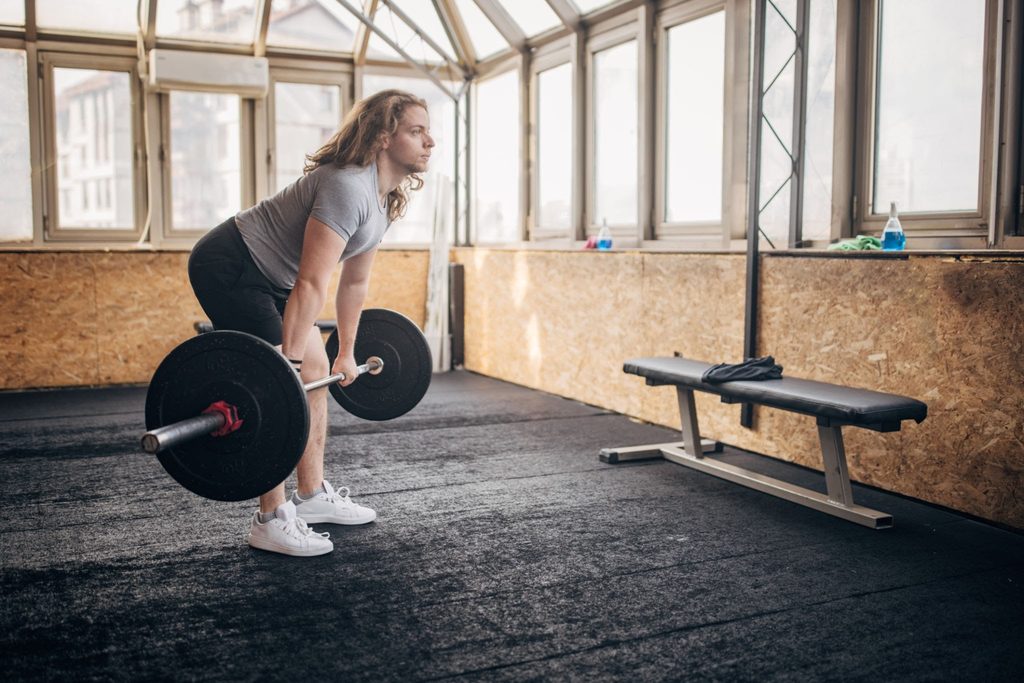
Tracking your progress ensures you aren’t just sweating; you are actively applying progressive overload to force your central nervous system to adapt.. Source: Hirurg / Getty Images
The 4 Metrics You Actually Need to Track
You do not need to track your exact rest periods down to the second, and you do not need to log your perceived sweat levels. To build real strength, you only need to record four variables for your primary compound lifts (Squats, Deadlifts, Bench Presses, Rows, Overhead Presses).
1
The Weight (Load)
This is the exact amount of weight on the bar or the machine. Always record the total weight (including the 45-pound Olympic barbell itself).
2
The Sets
How many groups of repetitions did you complete?
3
The Reps
How many successful, clean repetitions did you execute within each set? If your goal was 8 reps, but you only hit 6 on the last set, write down 6. Be painfully honest.
4
Rate of Perceived Exertion (RPE)
Optional but highly recommended
RPE is a scale from 1 to 10 that tracks how hard the set felt. An RPE of 10 means you could not have possibly done another rep. An RPE of 8 means you probably had 2 reps left in the tank. Jotting down “RPE 8” helps you know if you should increase the weight next week.
What a simple, perfect log entry looks like: Squat: 225 lbs — 3 sets x 8, 8, 6 reps (RPE 9)
That is all the data you need to know exactly what to do next week (try to get 8 reps on that final set before moving up to 230 lbs).
The Analog vs. Digital Debate
When figuring out how to track gym progress, you will inevitably face the choice between using an app or using a physical notebook. Both have pros and cons, but one is vastly superior for keeping you focused on the training floor.
The Problem with Fitness Apps
Apps are fantastic for long-term data visualization, but they are terrible for your immediate gym focus. When you pull out your phone to log a set of heavy squats, you are instantly hit with text messages, work emails, and social media notifications. A 2-minute rest period quickly turns into a 7-minute distraction. Furthermore, typing numbers into a tiny spreadsheet with sweaty hands is incredibly frustrating.
The Old-School Logbook
There is a reason the strongest lifters at any classic strength gym carry a physical notebook.
- Zero Distractions: A piece of paper cannot send you an email from your boss.
- Intentionality: The physical act of writing down a heavy lift creates a psychological contract with yourself.
- Speed: You can scribble down your sets, reps, and a quick note (“form felt sloppy on set 3”) in five seconds and immediately get your head back into the workout.
If you want to digitize your records, take 5 minutes when you get home to punch your notebook numbers into an Excel sheet. Keep the phone in your locker while you train.
Was this visual helpful?
Yes No
Let the Environment Do the Heavy Lifting
You can have the most meticulously organized logbook in the world, but if your gym environment constantly bottlenecks your workout, your progress will stall.
If your logbook dictates that you need to hit 225 pounds on the barbell squat today, but you have to wait 25 minutes for the only squat rack in a commercial fitness center, your warm-up is ruined, your central nervous system cools down, and you will likely fail the lift.
To execute a progressive strength program, you need a facility that respects the iron.
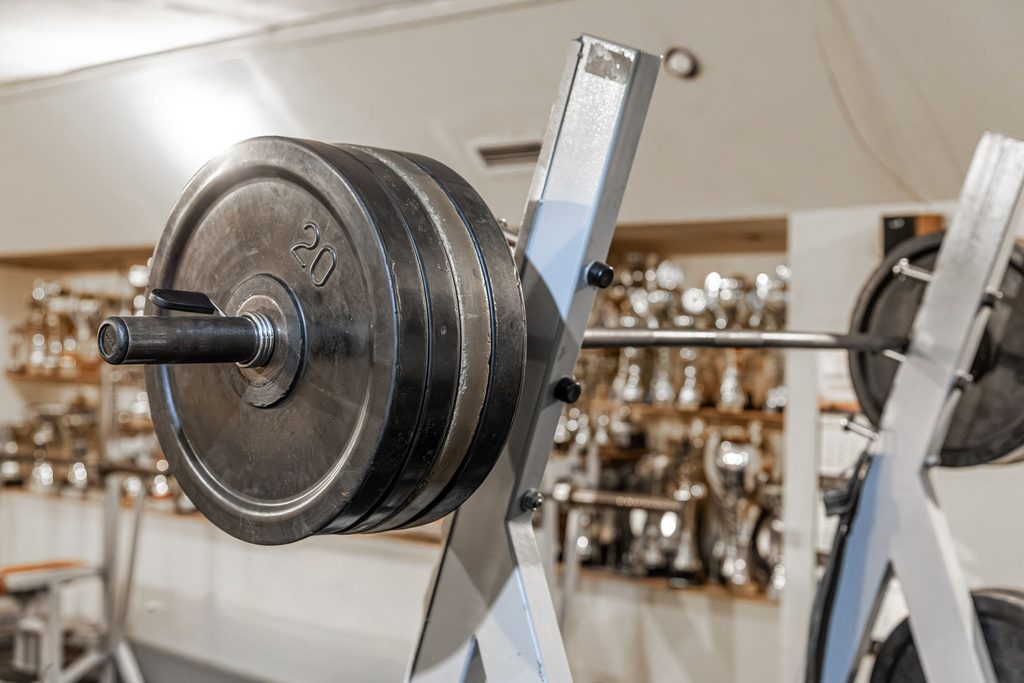
Executing progressive overload requires access to heavy, versatile free weights. You cannot scale your strength if your gym’s dumbbells max out at 75 pounds.. Source: ugis bralens / Getty Images
At Tulsa Fitness Club, we stripped out the commercial resort fluff and invested heavily in the equipment that actually drives results.
- No Waiting for Racks: We prioritize multiple heavy-duty power racks and deadlift platforms. When it is time to squat, you walk up and load the bar.
- Scale Without Limits: Our heavy hex dumbbells go far beyond the standard commercial limit. As you get stronger, we have the heavy iron ready for your next phase of progressive overload.
- Unrestricted 24/7 Access: Your encrypted digital key fob grants you entry 365 days a year. If you prefer to train and track your progress in absolute silence at 4:00 AM, the facility is yours.
Stop Guessing. Let Us Program It For You.
If tracking your own progressive overload feels like a math equation you don’t want to solve, we have baked elite coaching directly into our memberships to do it for you.
- Bronze Tier ($47/mo — Presale $37/mo): Unrestricted 24/7 access for the independent lifter who brings their own logbook.
- Silver Tier ($97/mo): 24/7 access plus expertly designed programming templates. We tell you exactly what sets, reps, and weights to hit to ensure you are progressing safely.
- Gold Tier ($297/mo): Full access, premium coaching check-ins, and highly customized programming. A professional strength coach tracks your metrics, reviews your form, and adjusts your progressive overload for you.

With Catalyst Coworking inside TFC, you can crush your lifting session, log your data, and transition seamlessly into deep-focus work without leaving the building.. Source: AleksandarGeorgiev / Getty Images
The Ultimate Downtown Hub
Building a strong body and building a strong career require the exact same discipline. That is why TFC is actively developing the Catalyst Coworking space and an on-site Fuel Bar directly inside our Blue Dome District location.
You can knock out your heavy lifting session on our competition-grade equipment, grab a high-protein recovery shake from the Fuel Bar, sit down in our secure, high-speed Wi-Fi lounge, and log your workout data directly into your laptop before answering your morning emails. We are rapidly becoming the ultimate off-site hub for physical and professional productivity.
Right now, you can lock in our Founding Member Presale Rate starting at just $37/month (with your first month for only $1).
Stop overcomplicating your training. Grab a notebook, lift heavy, apply progressive overload, and do it in an environment built for hard work.
Call us at 918-550-5549 or drop by 314 E 3rd St., Tulsa, OK 74120 during staffed hours to tour the facility, pick up your key fob, and lock in your membership before the presale ends. No contracts. No hidden fees. Just pure, trackable strength.