How to Learn Weightlifting From Videos Tips for Beginners
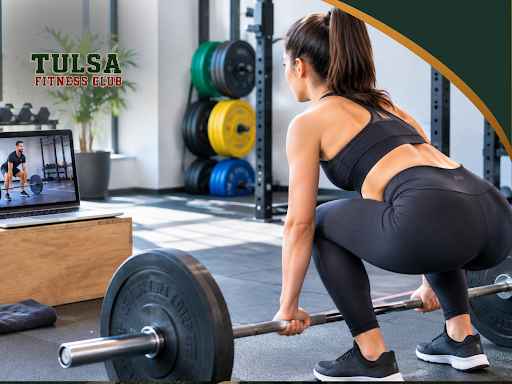
The modern era of fitness has created a fascinating paradox. If you want to learn how to execute a heavy barbell squat, you have more free information at your fingertips than any generation in human history. You can open YouTube, search for weightlifting instructional videos, and instantly access tens of thousands of tutorials.
But this massive volume of information has created a new problem: decision paralysis.
For a beginner, typing that search query feels like walking into a crowded room where everyone is screaming conflicting advice. One video tells you to look up at the ceiling when you squat; the next video tells you to look down at the floor. One influencer swears by a wide grip on the bench press, while another insists it will destroy your shoulders.
The fitness content industry is driven by algorithms, clicks, and engagement—not necessarily by safe, effective biomechanics. If you are trying to build a foundation of genuine strength, you cannot afford to take advice from a generic influencer just because they have a six-pack and good lighting.
At Tulsa Fitness Club (TFC), located in the historic Blue Dome District, we believe in the classic, proven principles of strength training. We built a no-nonsense facility for people who respect the iron. If you are a beginner trying to navigate the chaotic world of online coaching, here is the brutally honest guide on how to filter out the noise, find legitimate instructional content, and use your smartphone to actually correct your mechanics.
The Trap: Why Most Online Fitness Content Fails You
Before you can find the good videos, you have to understand why so much of the content online is actively detrimental to a beginner.
1. The Entertainment Bias
The YouTube and Instagram algorithms reward novelty. A video titled “How to Perform a Standard Barbell Squat” is boring to the algorithm. To get views, influencers invent overly complex, dangerous, or bizarre exercise variations (like squatting on a Bosu ball with kettlebells hanging from bands). Beginners see these videos, assume this is what advanced training looks like, and attempt them—often resulting in immediate injury.
2. The Context Disconnect
A competitive powerlifter arching their back to an extreme degree during a bench press is doing so to decrease the range of motion and win a competition. If you are a beginner looking to build general chest muscle, that extreme powerlifting arch is completely unnecessary and potentially dangerous. Most videos fail to provide the context of who the advice is actually for.
3. Cues vs. Anatomy
A “cue” is a mental image a coach gives you to help you move correctly (e.g., “push the floor away” during a deadlift). The problem is that cues are highly subjective. What works for someone with long femurs and a short torso might be terrible advice for someone with short legs and a long torso.
How to Find Legitimate Weightlifting Instructional Videos
If you want to learn how to move heavy iron, you need to curate your digital feed ruthlessly. Stop taking advice from lifestyle vloggers and start listening to established strength and conditioning professionals.
Here are the green flags to look for when evaluating an instructional video:
1
Check the Credentials
Look at their track record, not just their physique
The best coaches online usually have a background in biomechanics, physical therapy, or competitive strength sports (Powerlifting, Olympic Weightlifting, Strongman). Look for channels run by clinical athletes or certified strength and conditioning specialists (CSCS). If their entire channel is dedicated to “getting shredded in 30 days,” click away.
2
Focus on the Mechanics
The ‘Why’ is more important than the ‘What’
A great instructional video does not just show you the movement; it breaks down the anatomy. The coach should explain exactly why your feet should be positioned a certain way, what muscles you should feel engaging, and what a mechanical failure looks like.
3
Look for Unedited Execution
No fast cuts or loud music
If a tutorial video relies on fast jump-cuts, aggressive background music, and heavy editing, it is usually trying to hide poor form. You want to see the lifter execute the movement in real-time, from an unedited side angle, so you can observe the bar path from the start of the rep to the finish.
The Secret Weapon: The Self-Coaching Feedback Loop
Watching the best instructional video in the world will not make you a better lifter. You can memorize the perfect mechanics of a deadlift, but the moment you grab a heavy barbell, your central nervous system takes over, and your perception of your own body in space is almost always flawed.
You might think your lower back is perfectly flat during a deadlift, but in reality, it is rounding dangerously.
To bridge the gap between watching a video and actually executing the movement, you must employ the Self-Coaching Feedback Loop. You have to record yourself.
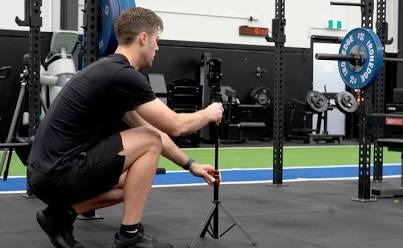
Setting up a smartphone tripod allows you to objectively review your mechanics between sets, providing the ultimate self-coaching feedback loop.. Source: Metric coach
How to Film Your Lifts Effectively
Do not feel embarrassed about setting up a phone in the gym. At a true strength facility like TFC, recording your sets for form review is a sign of a dedicated lifter.
- The Angle: Never film yourself from the front. A front angle hides the depth of your squat and the curvature of your spine. You must film from a direct side profile or a 45-degree front-diagonal angle.
- The Setup: Invest $15 in a cheap magnetic smartphone tripod that you can stick to a power rack. Leaning your phone against a water bottle on the floor provides a terrible, upward-facing angle that distorts your mechanics.
- The Review: After your set, do not immediately scroll social media. Pull up the video of your set, and pull up the instructional video you are trying to emulate. Compare the two side-by-side during your two-minute rest period.
Generating interactive visual…Structuring code, this may take a minute
Evaluating The Big Three
When you record yourself and compare it to your chosen weightlifting instructional videos, you need to know exactly what to look for. Here are the primary visual checkpoints for the foundational lifts:
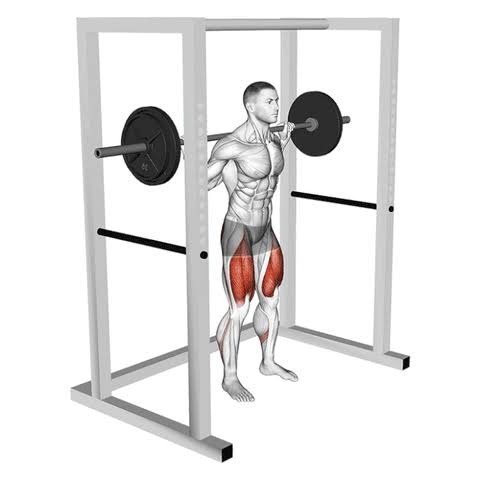
The Barbell Back Squat
- The Bar Path: When watching from a side profile, draw an imaginary vertical line straight down from the barbell. That line should intersect the exact middle of your foot throughout the entire movement. If the bar drifts forward over your toes, you are losing balance and risking your lower back.
- Depth: The crease of your hip must drop below the top of your knee cap. If it doesn’t, the weight is too heavy.
When reviewing your squat footage, ensure the bar path tracks perfectly over the mid-foot and that the hip crease drops below the knee.. Source: Arsenal Strength
The Conventional Deadlift
- The Spine: This is the most critical safety checkpoint in all of weightlifting. Your spine—from your tailbone to the base of your neck—must remain neutral (flat). If you see your lower back rounding like a frightened cat in your video, you must drop the weight immediately.
- The Hips and Shoulders: Your hips and shoulders must rise at the exact same time when the bar leaves the floor. If your hips shoot up first, turning the movement into a stiff-legged pull, your starting position is flawed.
The Flat Bench Press
- The Touch Point: The barbell should not touch your collarbones, nor should it touch your stomach. It should make contact with your lower chest (roughly at the sternum).
- The Elbow Flare: From a 45-degree angle, look at your elbows. They should be tucked at roughly a 45 to 60-degree angle from your torso. If your elbows are flared out 90 degrees (perfectly parallel with the bar), you are placing massive, dangerous stress on your rotator cuffs.
When Videos Aren’t Enough (The TFC Solution)
Teaching yourself how to lift via YouTube is a fantastic starting point, but it possesses a hard limitation. A video cannot provide tactile feedback. It cannot tap your lower back to remind you to brace your core, and it cannot dynamically adjust your grip width based on your specific arm length.
If you are serious about building strength without risking injury, eventually you need a professional eye.
But you shouldn’t have to pay a commercial personal trainer $80 an hour just to watch you squat. At Tulsa Fitness Club, we believe elite coaching should be accessible, transparent, and built directly into your environment.
Upgrade to a Built-In Coaching Model
We designed our 24/7 Blue Dome District facility specifically for structured lifters. You will find multiple heavy-duty power racks, deadlift platforms, and competition-grade iron, ensuring you have the space to set up your tripod, record your lifts, and execute your program without waiting in line.
If you want to take the guesswork completely out of the equation, we offer transparent membership tiers:
- Bronze Tier ($47/mo — Presale $37/mo): Unrestricted 24/7 key-fob access. Bring your tripod, bring your online program, and use our elite equipment to execute your plan.
- Silver Tier ($97/mo): 24/7 access plus expertly designed programming templates. We tell you exactly what movements to execute, removing the need to endlessly search for routines online.
- Gold Tier ($297/mo): The ultimate personal training replacement. Full access, premium coaching check-ins, and highly customized programming. You send your lifting videos to our professional strength coaches, and we break down your mechanics, provide direct form correction, and adjust your progressive overload safely.
The Presale Advantage: Right now, you can lock in our Founding Member Presale Rate starting at just $37/month, and your first month is only $1.
Furthermore, with the upcoming launch of our Catalyst Coworking space and Fuel Bar, TFC is rapidly becoming the ultimate off-site hub. You can record your lifts on the floor, grab a protein shake, sit down in our secure Wi-Fi lounge, and review your footage before heading to the office.
Stop endlessly scrolling through fitness influencer feeds. Learn the mechanics, record your sets, and train in an environment that respects the heavy iron.
Call us at 918-550-5549 or drop by 314 E 3rd St., Tulsa, OK 74120 during staffed hours to tour the facility, pick up your key fob, and lock in your Founding Member pricing before the presale ends.