Should You Work Out When Your Muscles Are Sore? The Biological Truth
You crushed a heavy barbell squat session on Monday. Now it is Wednesday morning, and getting out of bed feels like a monumental physical challenge. Your quads are stiff, your glutes are screaming, and your training program says you are scheduled to hit the gym again today.
The immediate question hits you: Should I work out when sore?
The fitness industry usually offers two terrible extremes as an answer. The hardcore “no days off” crowd will tell you to push through the pain and stop being weak. The hyper-cautious crowd will tell you to stay in bed for three days until you feel perfectly fresh.
Both approaches are biologically incorrect.
At Tulsa Fitness Club (TFC) in the historic Blue Dome District, we train our athletes to respect their physiology. Muscle soreness is a mathematical equation of mechanical tension and recovery. If you want to build a resilient, powerful physique without driving your central nervous system into the ground, here is the brutally honest, science-backed guide to navigating gym soreness.
DOMS vs. Actual Injury (Know the Difference)
Before you decide whether to train, you must diagnose the type of pain you are experiencing.
When you apply heavy mechanical tension to a muscle (especially during the eccentric, or lowering, phase of a lift), you create microscopic tears in the muscle fibers. Your body responds with localized inflammation to repair the tissue, making it thicker and stronger. This inflammation is what causes DOMS (Delayed Onset Muscle Soreness), which typically peaks 24 to 48 hours after your workout.
- DOMS feels like: A dull, aching stiffness spread across the belly of the muscle. It feels tight when you stretch it, but the pain dulls as you warm up and get blood flowing.
- An Injury feels like: A sharp, stabbing, highly localized pain—usually near a joint, tendon, or ligament. It does not go away when you warm up; it gets worse with movement.
The Golden Rule: You can (and often should) train through mild DOMS. You must never train through a sharp, localized joint injury.

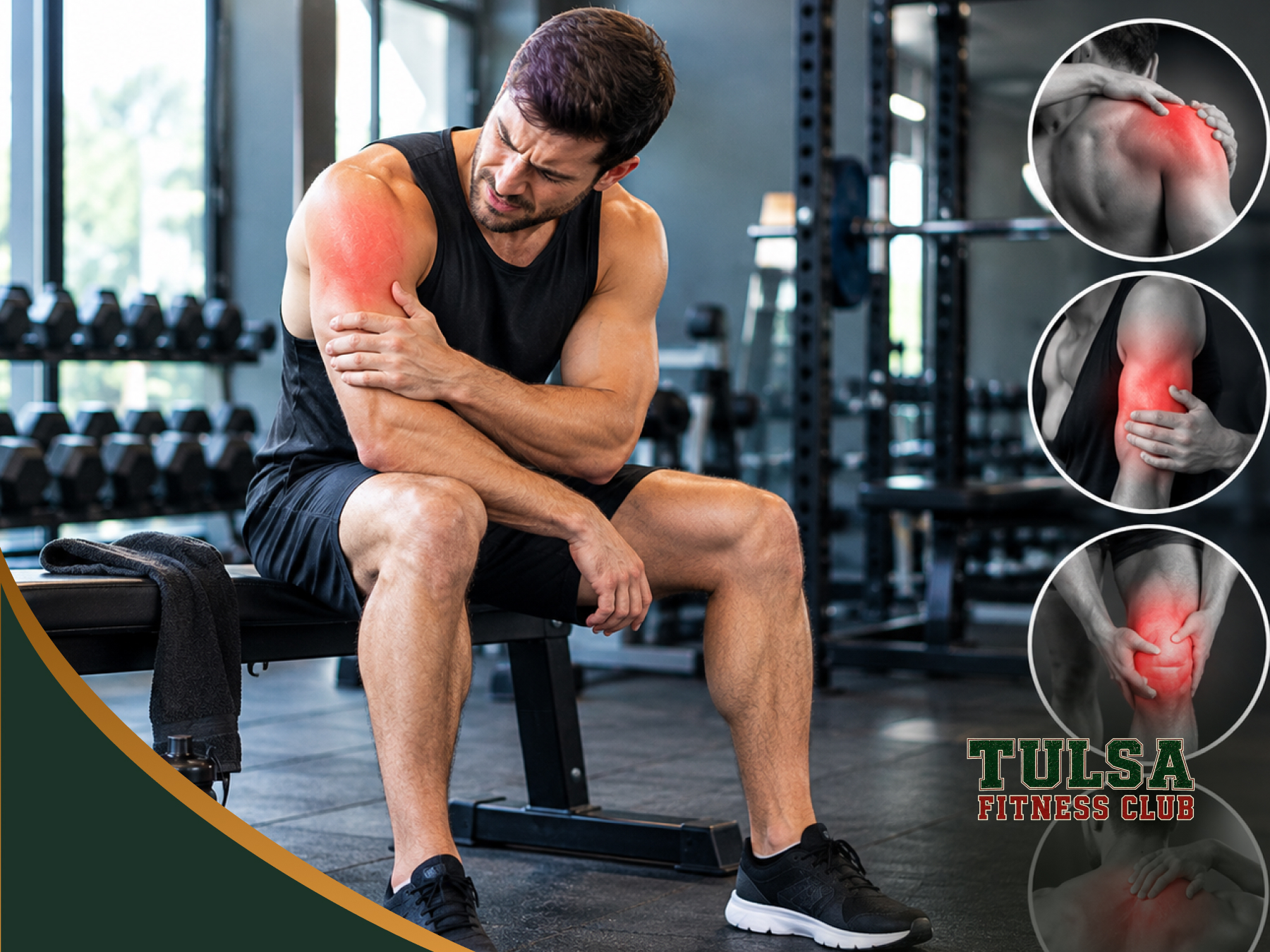
DOMS typically peaks 48 hours after a heavy lifting session. It is a dull, systemic ache across the muscle belly, not a sharp, stabbing pain in a joint.. Source: PeopleImages / Getty Images
The 3 Rules of Training While Sore
If you have confirmed that you are experiencing standard DOMS, you are cleared to hit the gym. But you cannot simply execute a maximum-effort heavy lifting block. You must adjust your strategy.
1
Rule 1: Train the Antagonist Muscle
Change the target
If your chest and triceps are completely destroyed from a heavy bench press session, do not attempt to do more pushing movements. Instead, train the antagonist (opposing) muscles. Execute a heavy back and bicep workout. The increased heart rate and blood flow will actually speed up the clearance of metabolic waste in your sore chest without interrupting its structural recovery.
2
Rule 2: Execute Active Recovery
Flush the tissue
If your entire body is brutally sore and you cannot fathom lifting heavy iron, do not sit on the couch. Sitting allows the inflamed tissue to stiffen. Go to the gym and perform “active recovery.” This means 20 minutes of light, steady-state cardio (like a stationary bike) or bodyweight mobility work. The goal is simply to pump oxygen and nutrient-rich blood into the damaged muscles to accelerate repair, without creating any new muscle damage.
3
Rule 3: Know When to Rest Completely
The CNS check
If you are experiencing severe, debilitating DOMS (where you literally cannot walk down a flight of stairs normally) AND you feel lethargic, irritable, and weak, your central nervous system (CNS) is overreached. Going to the gym will actively destroy your progress. Take a complete rest day, consume a massive amount of high-quality protein, and sleep for 8 hours.
Was this visual helpful?
Yes No
Why Commercial Gyms Make Recovery Harder
To properly execute an active recovery session or a highly specific, modified workout, you need autonomy.
If you go to a crowded commercial mega-gym when you are already sore and unmotivated, the friction is often too high. If you want to grab a foam roller and do 15 minutes of dynamic stretching, but the tiny functional area is packed with teenagers filming videos, you will likely just skip the session altogether.
You need an environment that provides the space, the tools, and the atmosphere to execute your recovery precisely as your body demands.
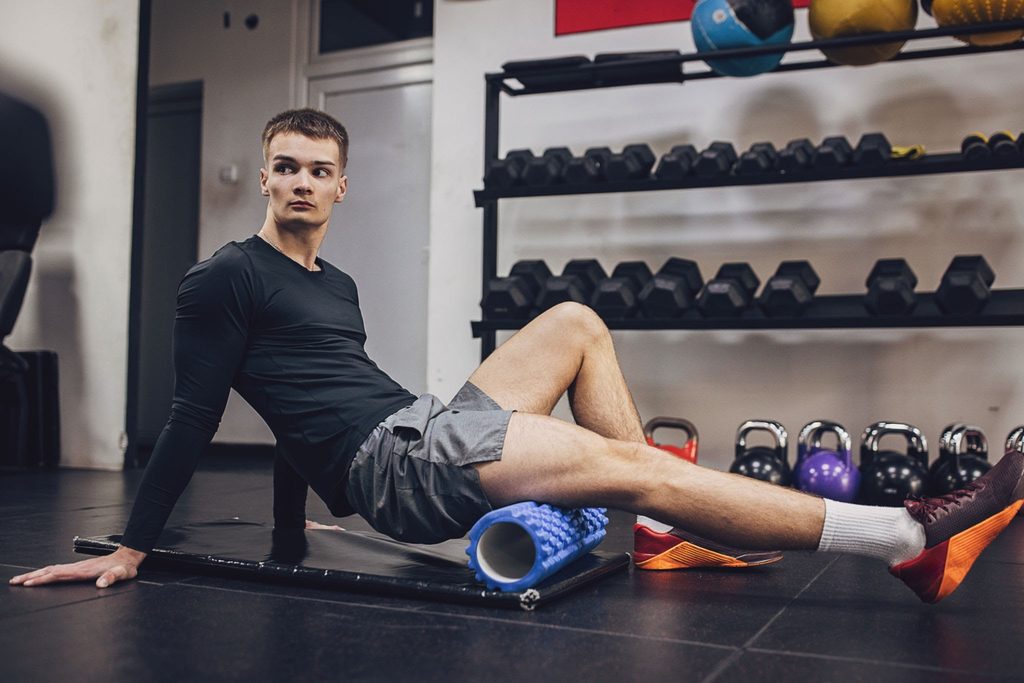
Active recovery—like foam rolling and light mobility work—pumps oxygen-rich blood into sore tissues, drastically speeding up the repair process.. Source: South_agency / Getty Images
The TFC Solution: Train and Recover on Your Terms
At Tulsa Fitness Club, we built a facility for adults who take their training and their recovery seriously. We stripped out the chaotic commercial environment to provide a gritty, focused strength sanctuary.
1. Unrestricted 24/7 Autonomy
Recovery does not happen on a strict 9-to-5 schedule. If you need to hit the gym at 10:00 PM for a quiet, 20-minute active recovery session on the stationary bike to flush your legs, your encrypted digital key fob grants you unrestricted 24/7 access to the facility, 365 days a year.
2. The Right Space for Mobility
We prioritize functional floor space. You will never have to fight for a corner just to stretch your hamstrings or foam-roll your lats. Our facility is designed to support the entire athletic cycle—from heavy power rack squats to deep tissue mobility work.
3. Built-In Coaching: Stop Guessing Your Fatigue
If you constantly find yourself asking, “Should I work out when sore?” you probably have a programming issue. Extreme, debilitating DOMS after every workout means your volume is incorrectly managed. We integrated elite coaching directly into our transparent memberships to solve this:
- Bronze Tier ($47/mo — Presale $37/mo): 24/7 access to the heavy iron and functional space. Perfect for the independent lifter who already knows how to autoregulate their training.
- Silver Tier ($97/mo): 24/7 access plus expertly designed periodized programming templates. We program your heavy days, your accessory days, and your active recovery days so you never overtrain.
- Gold Tier ($297/mo): The ultimate coaching replacement. Full access, premium coaching check-ins, and highly customized programming. Your TFC coach actively monitors your fatigue levels and adjusts your weekly volume to ensure you are recovering optimally.
The Presale Advantage: Right now, you can lock in our Founding Member Presale Rate starting at just $37/month(with your first month for only $1).
Furthermore, with the upcoming launch of our Catalyst Coworking space and Fuel Bar, TFC is the ultimate downtown ecosystem. Execute a light active recovery session, grab a high-protein shake to feed those damaged muscle fibers, and transition immediately into our secure Wi-Fi lounge to tackle your workday.
Stop letting soreness derail your consistency. Learn how to manage fatigue, apply active recovery, and train in a facility that respects the process.
Call us at 918-550-5549 or drop by 314 E 3rd St., Tulsa, OK 74120 during staffed hours to tour the facility, secure your digital key fob, and lock in your Founding Member pricing before the presale ends.