
Health Club, Fitness Center, or Gym: What’s Actually the Difference in Tulsa
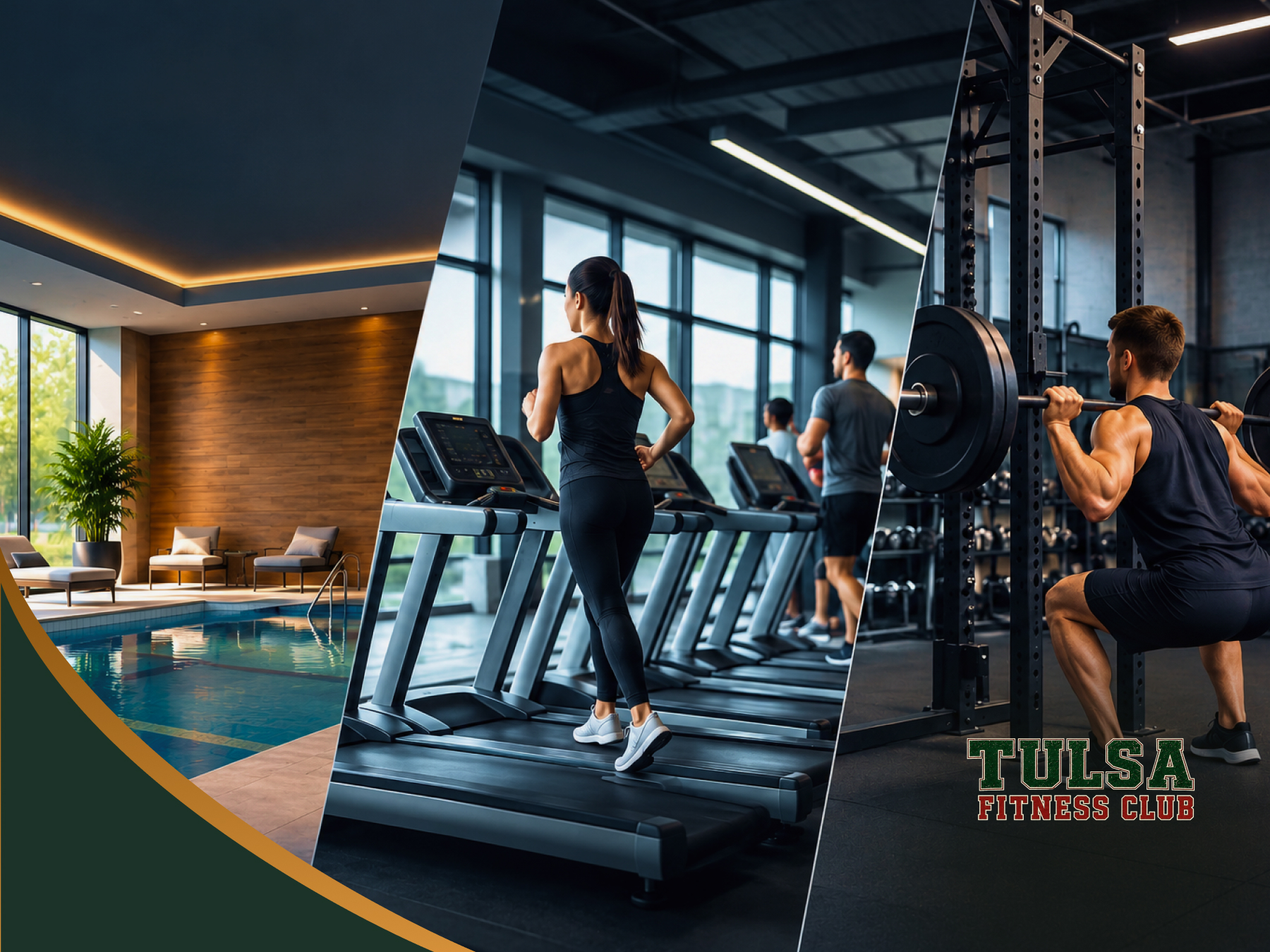
When searching for a place to work out in Tulsa, you will see three terms used almost interchangeably: health club, fitness center, and gym.
To the uninitiated, they all sound like the exact same thing—a building where you go to sweat. But in the modern fitness industry, these three labels represent entirely different business models, cultures, and price points. If you choose the wrong one for your specific goals, you will end up frustrated and paying for things you never use.
At Tulsa Fitness Club, located right in the Blue Dome District, we proudly call ourselves a gym. We don’t pretend to be a spa, and we aren’t a big-box commercial treadmill warehouse. We are a sanctuary for classic strength training.
If you are trying to navigate the Tulsa fitness landscape, here is a brutally honest breakdown of what these three terms actually mean, what they cost, and how to choose the right one for your goals.
1. The Health Club: The Resort Experience
When you hear “health club,” think of a country club without the golf course. These massive facilities are designed to be destinations where you can spend your entire Saturday.
- The Vibe: High-end, luxurious, and family-oriented.
- The Equipment: A mix of cardio machines, fixed-path strength machines, and a moderate free-weight section.
- The Amenities: This is what you are actually paying for. Health clubs in Tulsa (like Genesis Health Clubs or Life Time) boast indoor and outdoor pools, tennis or pickleball courts, massive sauna and steam room complexes, childcare centers, and full-service cafes. Tulsa Fitness Club.
- The Cost: Expensive. Monthly dues typically range from $70 to $150+ per month, often with hefty initiation fees and 12-month contracts.
Who it is for: The health club is perfect if you want to swim laps, drop your kids off at childcare, take a yoga class, and sit in the sauna.
Where it falls short: If your only goal is to lift weights, you are subsidizing a massive pool and tennis courts that you will never use. Furthermore, the free-weight sections can become incredibly crowded with casual lifters during peak hours.
Health clubs prioritize extensive amenities and rows of cardio equipment to appeal to the broadest possible demographic.. Source: Mindaugas Dulinskas / Getty Images
Key insight: You are paying for the square footage of the tennis courts and swimming pools, whether you use them or not.
2. The Fitness Center: The Commercial Middle Ground
The “fitness center” is the most common model in America today. These are the budget-friendly, big-box chains (like Planet Fitness or 10GYM) that you see in every major suburban strip mall.
- The Vibe: Casual, transient, and high-volume.
- The Equipment: The floor is dominated by rows of treadmills, ellipticals, and a massive circuit of fixed-path machines. Free weights are usually an afterthought, often lacking power racks or dumbbells heavier than 75 pounds.
- The Amenities: Basic locker rooms, maybe a few tanning beds or massage chairs in the “premium” tier.
- The Cost: The famous “teaser rate.” They advertise $10 to $15 a month, but they trap you with hidden $50 annual maintenance fees and strict cancellation policies.
3. The Gym: The Iron Sanctuary
A true gym strips away the fluff. There are no tennis courts, no smoothie bars, and no walls of televisions distracting you. A gym is a facility built entirely around hard work and raw physical progress.
- The Vibe: Focused, gritty, and community-driven. It is a place for people who respect the iron.
Tulsa Fitness Club
- The Equipment: Heavy-duty, “golden era” strength equipment. You will find multiple squat racks, deadlift platforms, specialized barbells, and heavy dumbbells.
Tulsa Fitness Club
- The Amenities: Exactly what you need to train and recover—no more, no less.
- The Cost: Transparent, flat-rate pricing. You pay for access to premium equipment, not for a swimming pool.
Who it is for: Shift workers, bodybuilders, powerlifters, and anyone who wants to build genuine strength without dealing with commercial gym crowds or restrictive hours.

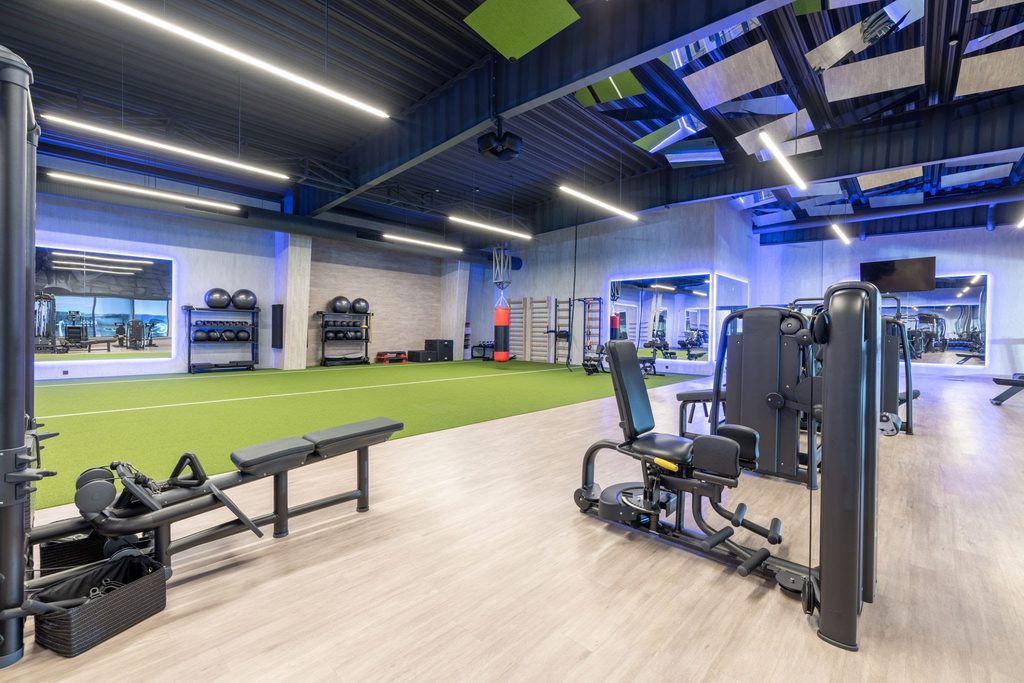
A true gym strips away the commercial fluff and focuses entirely on the heavy iron required to build real strength.. Source: Vsevolod Zelikov / Getty Images
Key insight: The layout of a true gym dedicates the majority of its square footage to free weights and racks, avoiding the bottlenecks common in fitness centers.
Why Tulsa Fitness Club is a True Gym
If you are tired of paying health club prices for amenities you don’t use, and you have outgrown the restricted equipment at your local fitness center, it is time to upgrade to a real gym.
At Tulsa Fitness Club, located at 314 E 3rd St. in the Blue Dome District, we brought old-school gym culture back to downtown Tulsa.
Here is how we do things differently:
- Unrestricted 24/7 Access: Your key fob gets you in 24 hours a day, 365 days a year. We don’t lock you out on holidays.
- Real Iron: We bypassed the trendy cardio machines to invest in classic bodybuilding and strength equipment.
- No Hidden Fees: We are a strict no-contract facility. You will never see a surprise “annual enhancement fee” on your credit card statement. Tulsa Fitness Club.
Lock In Your Founding Rate
Right now, you can secure our Bronze Tier Founding Member Presale Rate starting at just $37/month, and your first month is only $1.
For less than the price of a commercial fitness center (once you factor in their hidden fees), you get unrestricted 24/7 access to the best strength equipment in downtown Tulsa.
Stop wandering around massive health clubs looking for an open squat rack. Call us at 918-550-5549 or drop by 314 E 3rd St., Tulsa, OK 74120 during staffed hours to tour the gym, pick up your key fob, and lock in your membership before the presale ends.